Mobile Billboard Truck Advertising: Rental of advertising displays wrapped around trucks.
Provider: Blue Line Media offers rental of static/print and digital mobile billboard ads.
Effectiveness: Truck side advertising cuts through clutter, with digital options offering video and animation.
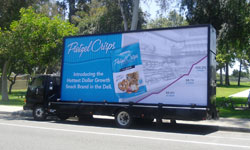
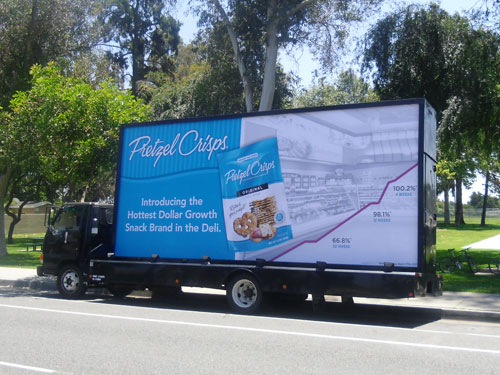
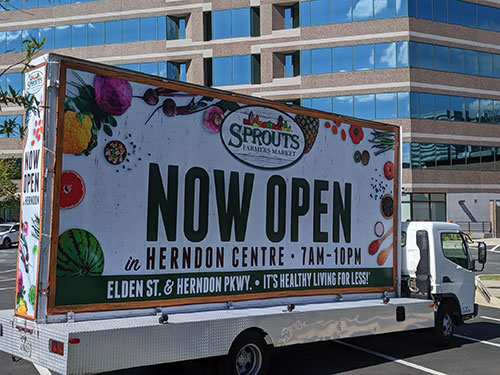
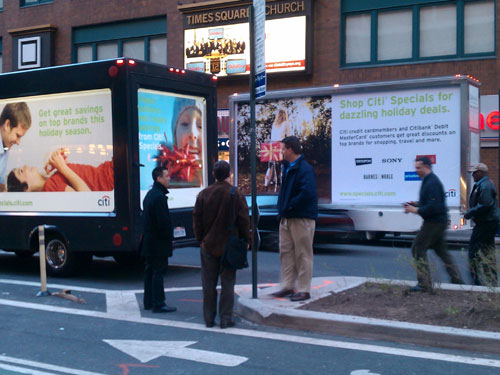
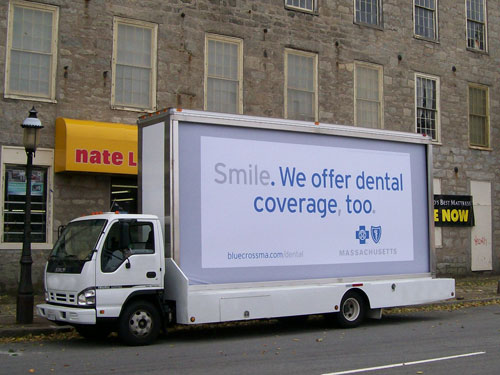
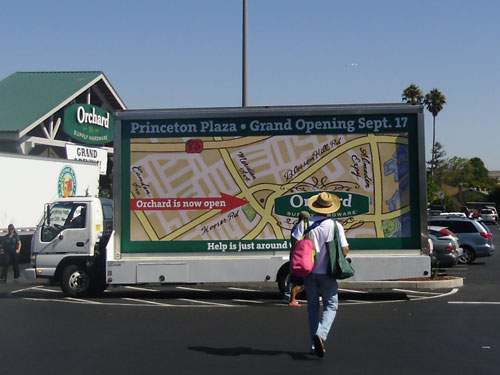
What is mobile billboard truck advertising? The definition of mobile billboard truck advertising is the rental of advertising displays that are wrapped around a board that is placed on the back of a truck and driven around a certain area - and more recently includes digital/LED/video trucks (also known as TV Truck advertising or driving billboards).
Blue Line Media is a mobile billboards and truck side advertising company that provides rental of static/print and digital mobile billboard ads. Categorized under billboard advertising, this medium is comprised of ads that are placed on trucks that drive around events or streets. As a result, the truck side advertising signs - cards and placards reach a target audience in a specific target location. Truck side advertising posters cut through the clutter and are especially effective in areas where advertising space is nonexistent.
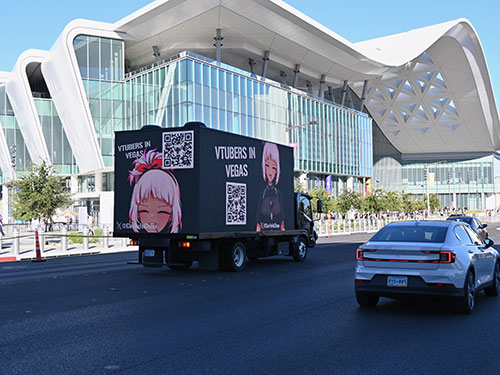
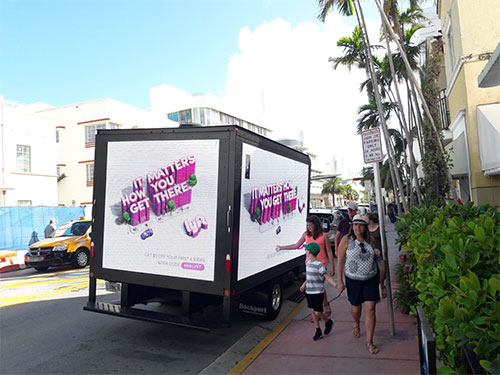
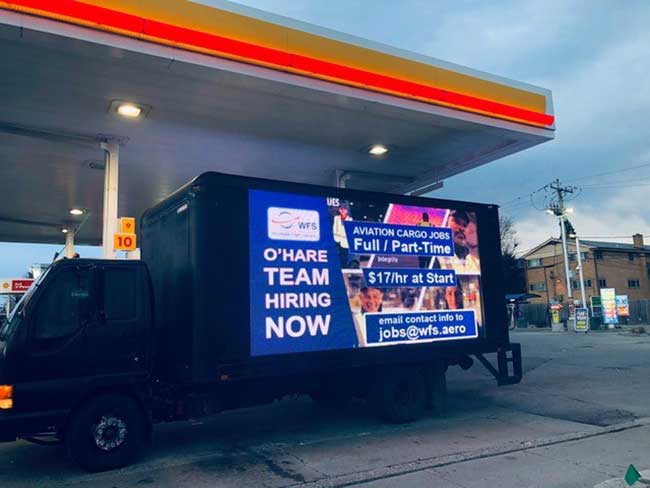
Digital/LED mobile billboard trucks - also known as video mobile billboard trucks or driving billboards - are now more popular than ever. With the video moving billboards, advertisers take advantage of reduced lead times, zero printing and installation costs and the ability to use video, animation and sound.
Advertisers also use truck side advertisements and displays to reach convention and event attendees, because advertisers can specify the routes for the truck to follow on any given day.
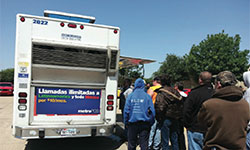
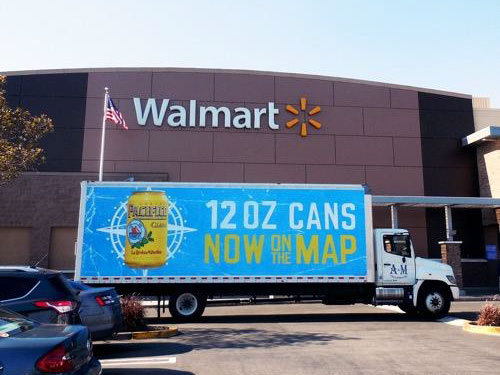
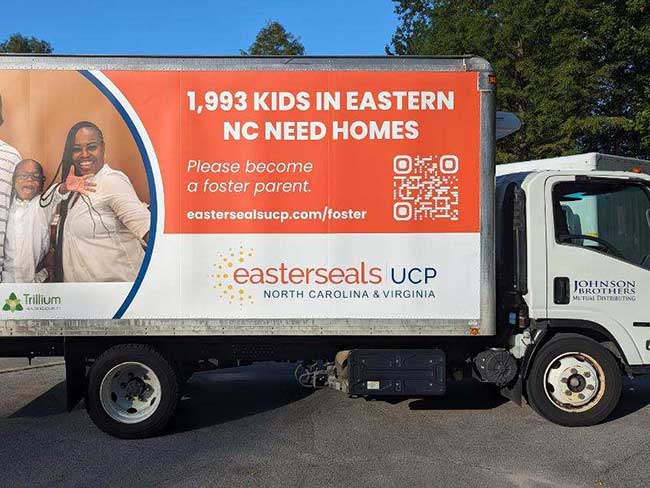
Recently added are local delivery truck ads. The local delivery trucks follow pre-set local routes to deliver goods to retailers and typically run 5 days per week (Monday through Friday) and some run on weekends. Typical schedules are 8-10 hours per truck per day. Most of the trucks deliver their loads at the front of the store and are thus visible to pedestrians and drivers.
Mobile Billboard Truck Versus Delivery Truck
Mobile Billboard Truck
Delivery Truck
Bought by day or week for short or medium term campaigns
Bought by month (4 weeks)
Static/print truck has narrow billboard on back of truck; Digital/LED/video truck is box-truck style
Box-truck style
Advertiser selects custom routes or parks somewhere
Pre-set routes
Commonly used for political, advocacy, trade shows/conventions and entertainment
More like roadside billboard or city bus advertising for general branding
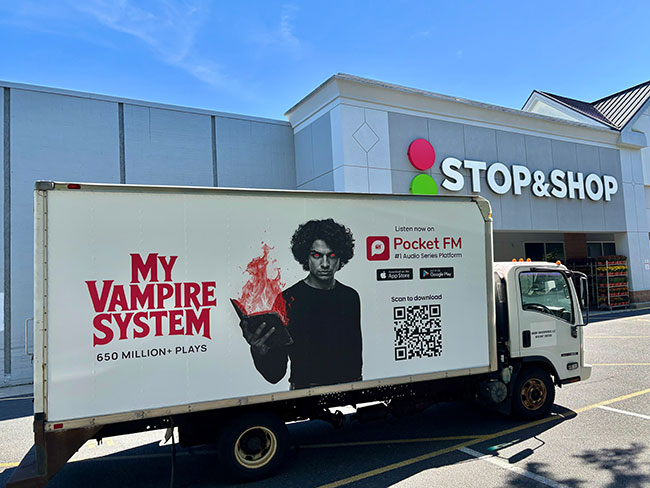
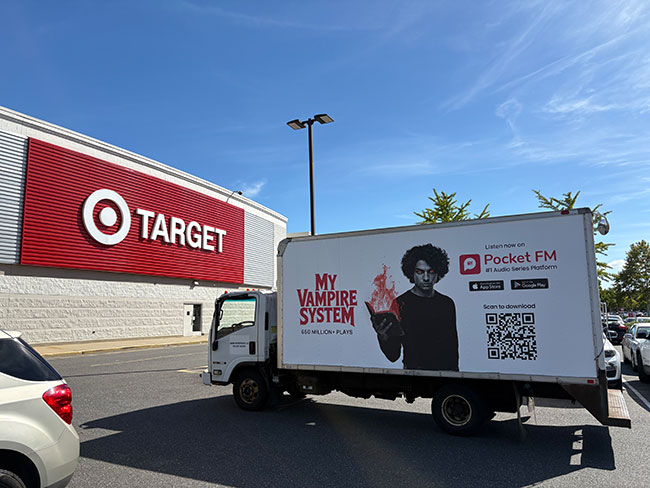
Pocket FM turned everyday deliveries into prime ad space. Their branded delivery trucks acted like moving billboards, building awareness on the road and right as products arrived at stores.
5 Digital/LED Mobile Billboard Trucks Grabbed Attention in a Big City
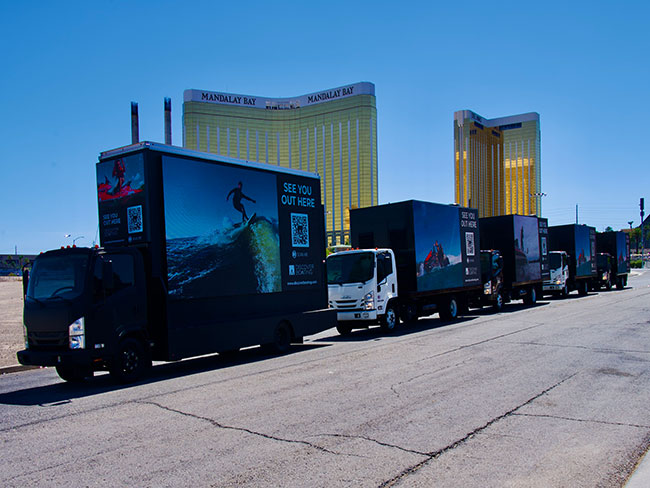
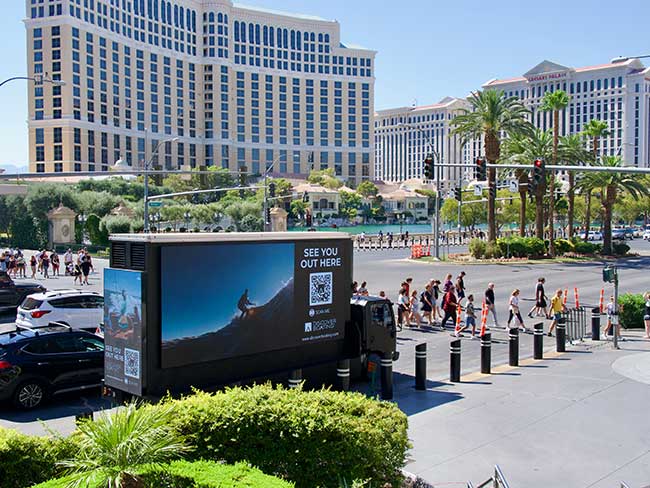
Discover Boating activated 5 digital/LED mobile billboard trucks in Las Vegas around the convention center to grab the attention of convention attendees.
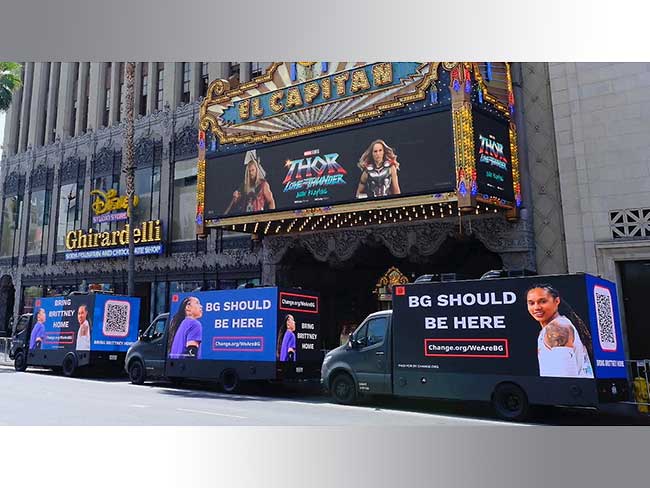
Three Side-by-Side Digital Mobile Billboard Trucks Received Media Coverage
Three side-by-side digital/LED mobile billboard trucks were activated in the Hollywood area of Los Angeles to bring attention to WNBA player Brittney Griner, who is stuck in a Russian jail.
The activation happened on the same day as the ESPYS at Dolby Theater. The trucks circled the venue and all nearby areas. The trucks were impactful in getting the attention of sports stars, celebrities, media/news and all supporting people attending the event.
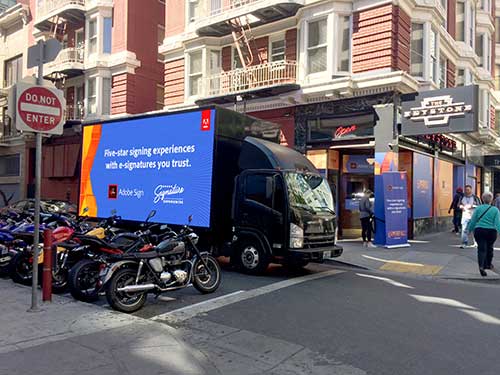
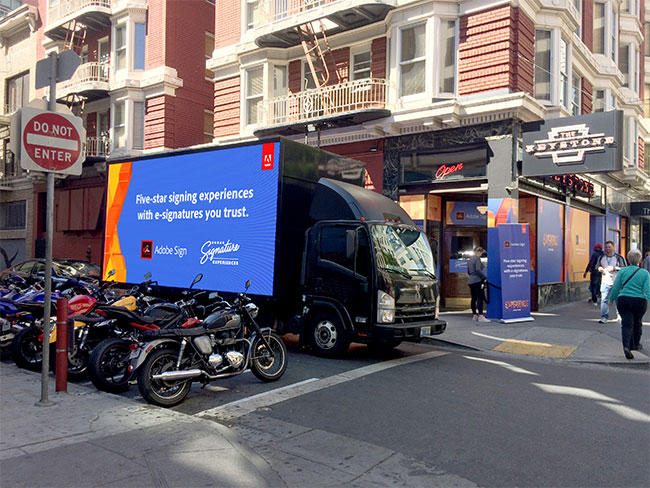
Adobe Advertised Next to Moscone Center For the Salesforce Dreamforce Conference
Adobe used multiple digital billboard trucks to circle around the Moscone Center and surrounding building in San Francisco to promote its Sign product during the Salesforce Dreamforce Conference. The digital trucks are bright and visible from a distance. The trucks spent most of their time circling the main convention center and then circled the surrounding parties and events. The four day event produced lots of impressions for the software maker.
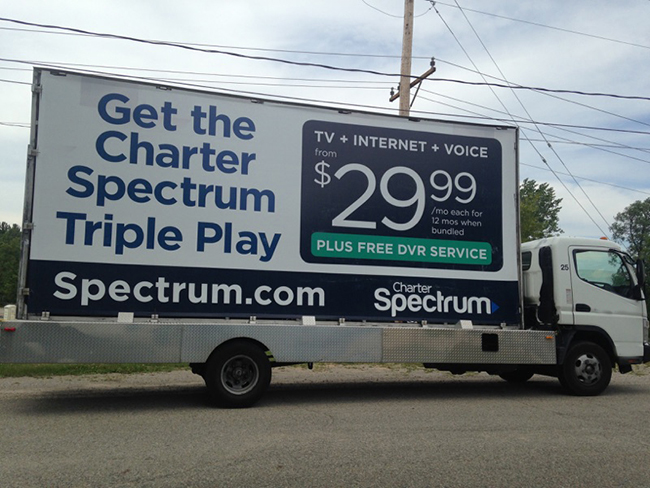
Charter Communications Used Mobile Billboards to Reach its Competitors' Customers
Charter Communications adopted mobile billboards in a big way. It entered markets and advertised directly against its competitors -- even calling them out in the ads. In the ad on top, Charter called out Allo customers; and in the other ad, it reached out to Solarus MediaShower customers.
With mobile billboard trucks, Charter was able to enter smaller markets where traditional stationary billboards are hard to find.
And because the billboard is mobile, it was able to go whereever the population density is: shopping center parking lots, outside of convention centers and heavily-used streets.
And the truck is even illuminated in the evenings.
All rates and minimum ad figures depend on timing and market, and availability may change without notice.
Minimum Purchase:
Minimum purchase requirement is $5,000 per market or higher (depending on market), which may be spread over displays and periods. May be reduced in certain cases.
Discounts:
Government and nonprofit organizations may receive a discount on advertising media.
Contract Due Date: As soon as possible, because advertising is sold on a first come, first served basis.
Creative Due Dates:
Static (Print): 2-3 weeks prior to ad start date. May be reduced in certain cases.
Digital: 3 business days prior to ad start date.
Format
Est. Impressions/Views Per Display Per Day
Mobile Billboard Truck, Static/Print
Est. Impressions/Views: Varies according to cities and routes.
Size: 258" W x 115" H (Sides); 24" W x 115" H (Rear)
Mobile Billboard Truck, Digital
Est. Impressions/Views: Varies according to cities and routes.
Size: 10' W x 6' H (Sides); 6' W x 6' H (Rear)
Resolution: 1280px W x 720px H (Sides); 720px W x 720px H (Rear)
Delivery Truck, Static/Print
Est. Impressions/Views: Varies according to cities and routes.
Size for 14-19' Truck: 180" W x 80" H (Sides); 78" W x 59" H (Rear); 80" W x 18" H (Overcab)
Size for 20-25' Truck: 280" W x 90" H (Sides); 80" W x 73" H (Rear); 80" W x 32" H (Overcab)
Mobile billboard advertising uses trucks or trailers that display large ads (static or digital/LED) and drive through targeted areas to reach people on streets, near venues, and in high-traffic corridors.
2. How do mobile billboards differ from traditional roadside billboards?
Traditional roadside billboards are fixed in one location, while mobile billboards move through neighborhoods and can be routed to specific zones, events, and time windows for flexible coverage.
3. Where do mobile billboard trucks typically operate?
They commonly operate in downtown districts, shopping corridors, near stadiums and arenas, around convention centers, beaches, nightlife zones, campus areas, and along major commuter routes.
4. What types of mobile billboard formats are available?
Common formats include static poster panels, digital/LED mobile billboards, and wrapped vehicles or trailers. Some campaigns also add audio, street teams, or experiential activations.
5. What are mobile billboards best used for?
They’re best for event promotion, product launches, grand openings, local awareness, and high-impact visibility near specific venues or neighborhoods on specific days and times.
6. Can I choose routes, neighborhoods, and schedules?
Yes—most programs allow routing by neighborhood, event zones, or custom routes, and scheduling by daypart (morning commute, lunch, evening, weekends) depending on local rules and logistics.
7. How is mobile billboard advertising priced?
Pricing is typically based on the number of trucks, hours per day (often an 8-hour day), number of days, market, and whether the unit is static or digital/LED.
8. What creative works best on mobile billboards?
Keep it bold and minimal: short headline, strong branding, high contrast, and a simple call-to-action. For LED trucks, use clean motion and avoid small text.
9. What should I know about permits and local restrictions?
Rules vary by city and can affect parking, idling, sound, and where trucks can stage or circulate. Reputable providers plan routes that comply with local regulations.
10. How is the campaign verified or reported?
Reporting often includes route documentation, time windows, and may include GPS logs, photos, or recap reports. Some campaigns also track performance via QR codes, short URLs, or promo codes.
Various incl. Charleston, WV and Huntington-Ashland, WV-KY-OH
West Virginia
Clarksburg-Weston, WV
Clarksburg, WV
West Virginia
Parkersburg, WV
Parkersburg-Vienna, WV
Wisconsin
Duluth, MN-Superior, WI
Duluth, MN-WI
Wisconsin
Green Bay-Appleton, WI
Green Bay, WI
Wisconsin
La Crosse-Eau Claire, WI
La Crosse-Onalaska, WI-MN
Wisconsin
Madison, WI
Madison, WI
Wisconsin
Milwaukee, WI
Milwaukee-Waukesha-West Allis, WI
Wisconsin
Wausau-Rhinelander, WI
Wausau, WI
Wyoming
Casper-Riverton, WY
Casper, WY
Copyright 2025 Blue Line Media Inc
Blue Line Media is not the owner or exclusive provider of advertising formats presented on this website.
Not all images represent ads placed by Blue Line Media. Images may be subject to copyright. Names and trade and service marks are property of their owners and are not intended to endorse Blue Line Media.
In accordance with its Accessibility Statement, Blue Line Media is committed to ensuring accessibility of its website. To report an accessibility issue, request accessibility assistance regarding website content, or to request a specific electronic format, please contact the accessibility coordinator at 800-807-0360 or complete the form. Reasonable efforts will be made to accommodate all needs.
By using this website, you consent to the placement and storing of cookies on your computer by this website. These cookies are used to collect information about how you interact with our website and allow us to remember you. We use this information in order to improve and customize your browsing experience and for analytics and metrics about our visitors both on this website and other media. To find out more about the cookies we use, see our Privacy Policy.