Description

Jump to rates below.

  • Train & Rail Advertising: Out-of-home advertising displayed on commuter rail, light rail, regional rail systems, rail cars, stations, and platforms.
  • Formats: Options include station displays, digital screens, interior car cards, exterior train advertising and wraps, urban panels, and station domination campaigns.
  • Targeting: Campaigns may be selected by market, rail line, station, commuter corridor, placement type, or groups of stations depending on available inventory.

What Is Train and Rail Advertising?

Train and rail advertising is out-of-home advertising placed on rail vehicles and throughout train station environments. Advertising can appear inside rail cars, on train exteriors, on platforms, inside stations, and around station entrances and exits.

Blue Line Media offers train and rail advertising across commuter rail, light rail, regional rail, and other participating rail systems.

Train Advertising vs. Subway Advertising

Train and rail advertising on this page focuses on commuter rail, light rail, regional rail, and similar train systems. For advertising specifically in subway systems, including subway stations, platforms, and subway cars, see our subway advertising options.

Train Station Advertising

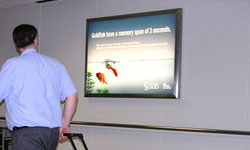
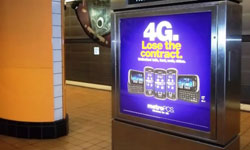
Train station advertising includes static and digital displays located throughout participating rail stations and platforms. Formats may include backlit displays, posters, digital screens, urban panels, platform media, wall displays, and other station inventory.

Train Interior Advertising

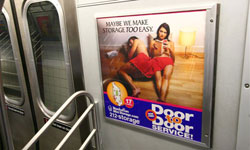
Train interior advertising reaches passengers while they travel inside rail cars. Available formats may include vertical and horizontal interior car cards, posters, panels, and larger interior branding programs depending on the rail system.

Train Exterior Advertising and Wraps

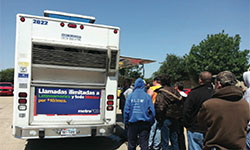
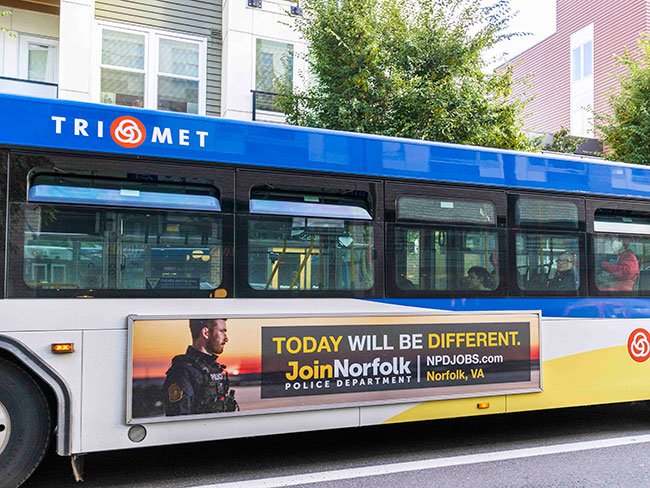
Train exterior advertising places advertising on the outside of rail cars. Depending on the system, formats may include side displays, partial train wraps, and full train wraps.

Exterior train advertising can reach passengers as well as pedestrians, drivers, and other people along rail routes and near stations.

Digital Train and Rail Advertising

Digital rail advertising uses digital or video screens located inside participating stations, platforms, or other rail environments. Depending on the network, advertisers may rotate creative, use motion or video, schedule campaigns by time period, and update creative remotely.

Light Rail Advertising

Light rail advertising includes advertising on light rail vehicles and in participating light rail stations and platforms. Available formats can include interior car cards, exterior vehicle advertising, station displays, digital screens, and other rail media.

Commuter and Regional Rail Advertising

Commuter rail advertising reaches passengers traveling between residential areas, employment centers, downtown districts, and other destinations. Depending on the system, advertising may be available inside trains, on train exteriors, and throughout stations and platforms.

Amtrak Advertising

Advertising may also be available through participating Amtrak train and station programs. Available inventory can include train, station, lounge, poster, digital, and other rail advertising formats depending on the route, station, and current program availability.

Also available are Acela Club Lounges in the Northeast Corridor. Lines include the Acela Express, Northeast Regional, Keystone and Empire lines, as well as in-station posters at the following stations (including Acela Club Lounges).

  • Washington Union Station
  • New York Penn Station
  • Philadelphia 30th Street Station
  • Boston South Station
  • Washington Union Station
  • Wilmington, DE
  • Baltimore Penn Station
  • BWI Airport Station, MD
  • New Carrollton, MD
  • Union Station Domination, Washington DC-Amtrak

Station Domination and Station Takeover Advertising

Station domination, also called a station takeover, uses multiple advertising placements throughout a train station to create a large-scale branded presence.

A station domination may combine posters, digital screens, wall displays, platform media, entrance or exit placements, and other available inventory. The exact number and type of displays varies by station and rail system.

How Is Train and Rail Advertising Targeted?

Depending on the rail system and available inventory, campaigns may be targeted by market, rail line, station, commuter corridor, geographic area, station group, or specific advertising format.

This can help advertisers concentrate campaigns around employment centers, downtown districts, neighborhoods, retail destinations, campuses, airports, event locations, and other areas served by rail.

Why Use Train and Rail Advertising?

Train and rail advertising reaches passengers during repeated commuting and travel activity. Advertising can receive exposure while passengers enter stations, wait on platforms, travel inside rail cars, and move through station environments.

Exterior train advertising can also extend visibility beyond passengers by reaching people along rail routes and around stations.

How Much Does Train and Rail Advertising Cost?

Train and rail advertising rates vary by market, rail system, station, placement type, number of displays or rail cars, campaign length, production requirements, and inventory availability.

Larger formats such as train wraps and station domination campaigns generally require larger budgets than individual interior cards, posters, or digital displays. See the rates below for estimated pricing by advertising format.
Recent Campaigns

Cuacao Wrapped Trains With Advertising

Curacao Train-Rail Wrap Advertising

Curacao wrapped trains with advertising. The bold and colorful designs are eye-catching as they pass motorists and pedestrians in the city.

Jobcase Activated a Train Station Domination Advertising Program

Job Case Train Station Domination Advertising

Jobcase took over the 35th Street Station in Chicago (also known as Sox Station) with a train station domination advertising program. Every single advertising display in the station is dedicated to Jobcase's various creatives. The ads feature various models with attention-grabbing headlines. Viewers feel the impact of a station domination immediately when they enter the station.

See more pics.

Educator Advertised on Rail With Train Exterior Wraps

DISD Train-Rail Advertising

Dallas Independent School District advertised its new free preschool program to city residents by wrapping the exterior of train cars in the rail transportation system. Known as Ultra Super Kings, this particular ad format is a partial wrap of the train car, which is more cost effective.

See the pictures.

Rates

General:

Estimated per display per period (4 weeks). For more specific pricing: Pricing

Why a range of rates? [X]

Format Rate
Backlit Diorama $400 - $1,950
2 Sheet $400 - $950
Digital $500 - $800
Train Exterior $2,000 - $7,500
Interior Car Card (Vertical Format) $75 - $150
Interior Car Card (Horizontal Format) $50 - $100
Urban Panel $750 - $2,000
Station Domination $25,000 - $75,000 or more per station per 4 week period

Range of rates depends on timing and market.

Minimum Purchase:

Minimum purchase requirement is $5,000 per market or higher (depending on market), which may be spread over displays and periods. May be reduced in certain cases.
Note: in larger metro cities, Train Interior Car Cards have minimums starting at $40,000-$60,000.


Discounts:

Government and nonprofit organizations may receive a discount on train advertising.

Specs/Imps

Range of estimated impressions/views depends on market.

Contract Due Date: As soon as possible, because advertising is sold on a first come, first served basis.

Creative Due Dates:

  • Static (Print): 2-3 weeks prior to ad start date. May be reduced in certain cases.
  • Digital: 3 business days prior to ad start date.
Format Est. Impressions/Views Per Display Per Day
Backlit Diorama 3,000 to 10,000
Size: 62" W x 43" H
2 Sheet 2,000 to 8,000
Size: 60" W x 46"
Digital 2,000 to 8,000
Size: 1920px W x 1080px H
Train Exterior 4,000 to 10,000
Size: Varies
Interior Car Card Display (Vertical Format) 1,000 to 5,000
Size: 21" W x 22" H
Interior Car Card (Horizontal Format) 2,000 to 6,000
Size: 28" W x 11" H, 46" W x 11" H or 70" W x 11" H, depending on market
Urban Panel TBD.
Size: 60" W x 30" H
Station Domination TBD.
Size: TBD

FAQ

1. What is train and rail advertising?

Train/rail advertising is out-of-home media placed on commuter rail, light rail, and regional train systems, including ads in stations, on platforms, and inside or outside rail cars.

2. What are the most common rail ad placements?

Common placements include station posters, platform displays, digital screens, wall wraps, stair risers, interior rail car cards/panels, and (in some systems) exterior rail car ads or wraps.

3. How does train/rail advertising differ from subway advertising?

Rail systems often include longer trips and above-ground stations, which can increase dwell time and provide additional visibility at platforms, parking areas, and station approaches.

4. Who does train and rail advertising reach?

Commuters and frequent riders, including workers traveling into downtown cores, students, and residents moving between neighborhoods and suburbs (audience mix varies by system).

5. What objectives are rail ads best suited for?

Rail advertising is strong for building awareness along commuter corridors, reinforcing brand frequency with repeat riders, and driving traffic to destinations near stations.

6. Can I choose specific lines, stations, or commuter corridors?

Often yes—many programs allow buying by line, station, zone, or station groups, helping you focus on key routes, neighborhood hubs, and high-volume commuter areas.

7. How are train/rail ad campaigns bought and priced?

Rail campaigns are typically purchased by the number of units or stations for a flight period (often 4 weeks). Pricing varies by market, ridership, placement type, and whether the inventory is static or digital.

8. What creative works best for train and rail ads?

Use bold visuals, high contrast, and clear branding. Station and platform ads should be readable at a distance; in-car ads can include slightly more detail because riders view them up close.

9. What are typical production and posting requirements?

Transit authorities and vendors require approved creative and exact specs. Static placements need print-ready files and lead time for production/posting; digital placements require the correct file formats and scheduling.

10. How is rail advertising verified or reported?

Reporting typically includes station/unit lists and proof of posting for static inventory or proof-of-play for digital screens, along with impression estimates based on ridership and station traffic.

Markets

Train/rail ads are available in the following markets:

State Market
California Los Angeles, CA
California San Diego, CA
Colorado Denver, CO
Delaware New Castle County (Wilmington), DE
Illinois Champaign and Springfield-Decatur, IL
Illinois Chicago, IL
Illinois Paducah, KY-Cape Girardeau, MO-Harrisburg, IL
Illinois Peoria-Bloomington, IL
Illinois Rockford, IL
Louisiana New Orleans, LA
Maryland Baltimore, MD
Maryland Salisbury, MD
Massachusetts Boston, MA (Amtrak)
Massachusetts Providence, RI-New Bedford, MA
Massachusetts Springfield-Holyoke, MA
Missouri Saint Louis (St Louis), MO
Nevada Las Vegas, NV
New Jersey Entire state, incl. Newark, NJ and Jersey City, NJ
New York Albany-Schenectady-Troy, NY
New York Binghamton, NY
New York Buffalo, NY
New York New York, NY (PATH, New Jersey Transit and Amtrak)
North Carolina Charlotte, NC
Ohio Cleveland-Akron (Canton), OH
Oregon Portland, OR
Pennsylvania Erie, PA
Pennsylvania Harrisburg-Lancaster-Lebanon-York, PA
Pennsylvania Johnstown-Altoona, PA
Pennsylvania Philadelphia, PA (Amtrak)
Pennsylvania Pittsburgh, PA
Pennsylvania Wilkes Barre-Scranton, PA
Puerto Rico San Juan, PR
Texas Dallas, TX
Utah Salt Lake City, UT
Virginia Norfolk-Portsmouth-Newport News, VA
Washington Seattle-Tacoma, WA
Washington, DC Washington, DC (Amtrak)
Amtrak Acela Northeast Corridor covering 10 markets and 8 states from DC to Boston
Blue Line Media logo

Copyright 2026 Blue Line Media Inc

Not all images represent ads placed by Blue Line Media. Images may be subject to copyright. Names and trade and service marks are property of their owners and are not intended to endorse Blue Line Media.

In accordance with its Accessibility Statement, Blue Line Media is committed to ensuring accessibility of its website. To report an accessibility issue, request accessibility assistance regarding website content, or to request a specific electronic format, please contact the accessibility coordinator at 800-807-0360 or complete the form. Reasonable efforts will be made to accommodate all needs.

By using this website, you consent to the placement and storing of cookies on your computer by this website. These cookies are used to collect information about how you interact with our website and allow us to remember you. We use this information in order to improve and customize your browsing experience and for analytics and metrics about our visitors both on this website and other media. To find out more about the cookies we use, see our Privacy Policy.

The Geopath Audience Location Measurement data is provided by the GeoPath, Inc. New York, New York. © Copyright 2026 All Rights Reserved.

Certain info and images may be AI-generated. Double-check important info and images.

BACK TO TOP