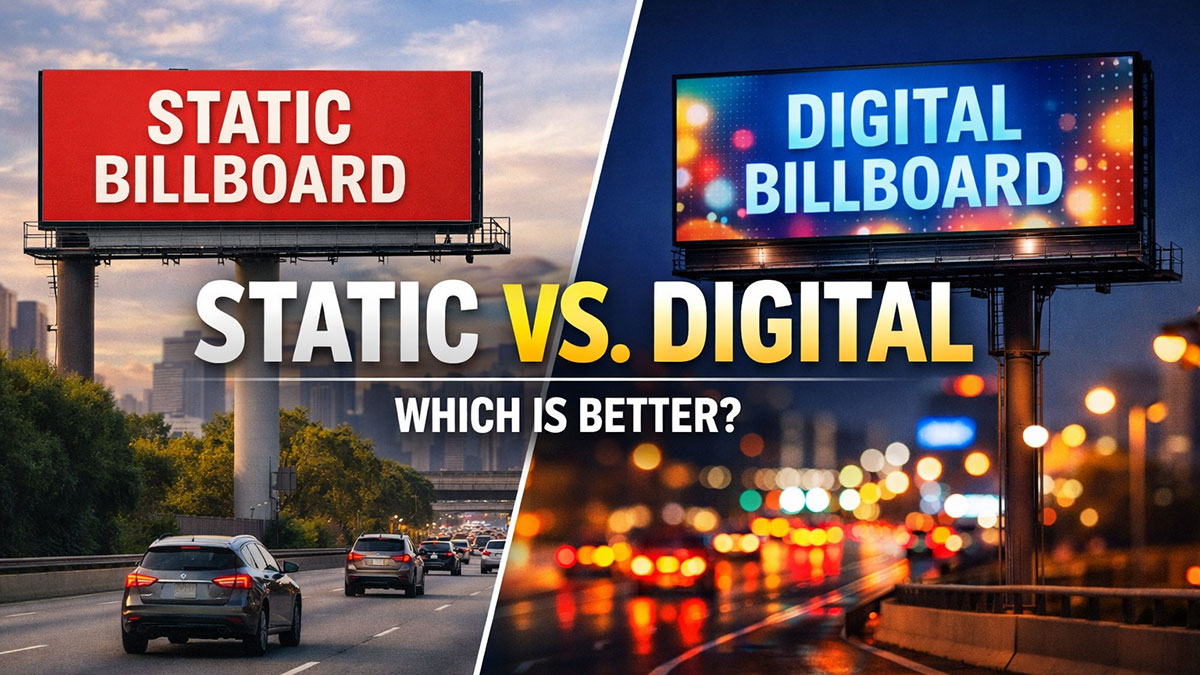
Static and digital billboards can both be effective advertising tools, but they work in different ways. The better option depends on your budget, timing, message, market, and campaign goals.
Helpful Note
Digital billboards are also commonly called LED billboards. In many markets, advertisers use the terms digital billboard and LED billboard interchangeably.
Quick answer: Static billboards are often a strong fit for longer campaigns, simpler messaging, and cost-conscious buys. Digital (LED) billboards are often a strong fit for flexible scheduling, time-sensitive messaging, and advertisers who want to rotate multiple creatives.
What Is a Static Billboard?
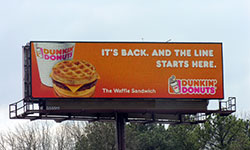
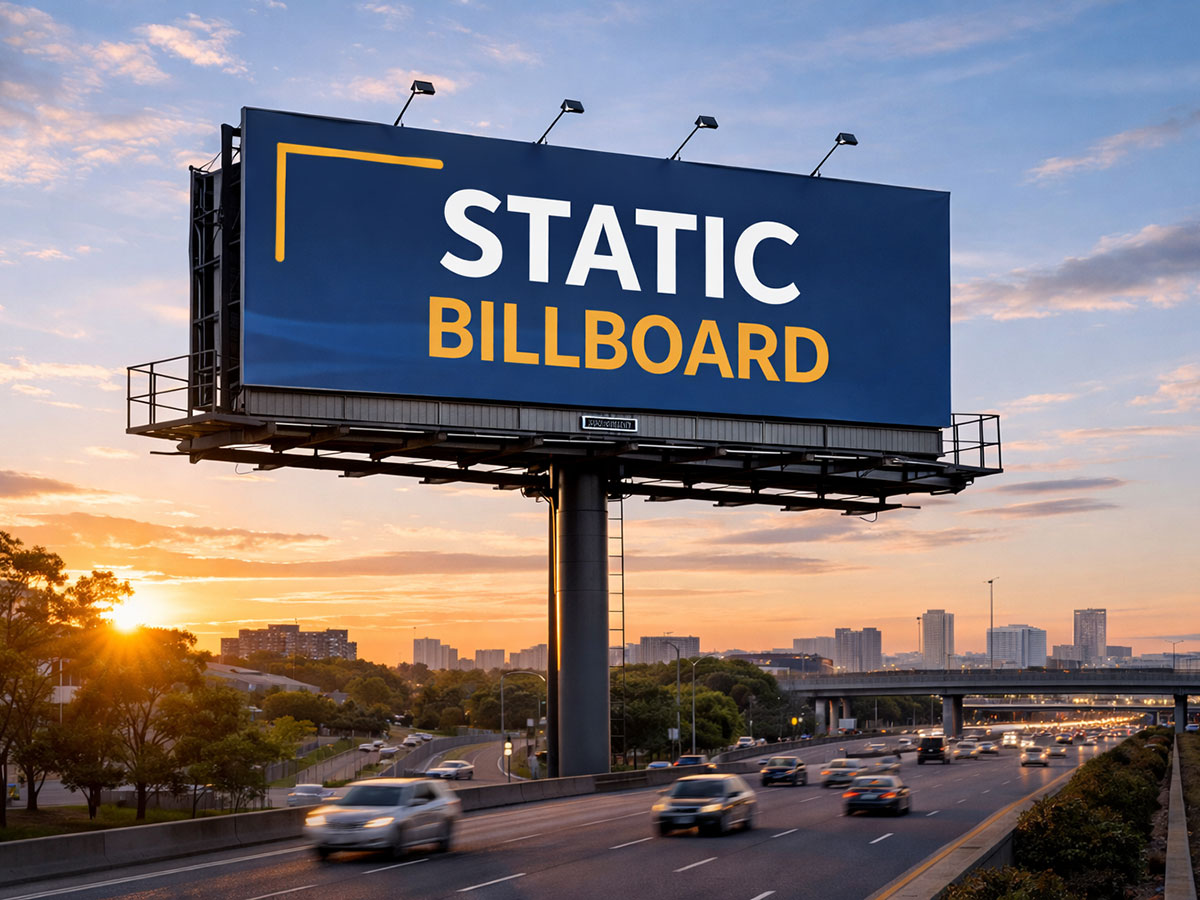
A static billboard is a traditional printed billboard. The creative is produced on vinyl or another printed material and installed on the structure for a fixed period of time. The ad remains the same until it is physically replaced.
Common Characteristics of Static Billboards
- One message stays in place full time
- Often used for branding, awareness, and directional advertising
- Requires printed production and installation
- Frequently purchased for four-week or longer runs
- Can be a practical choice for broad, consistent exposure
What Is a Digital Billboard?
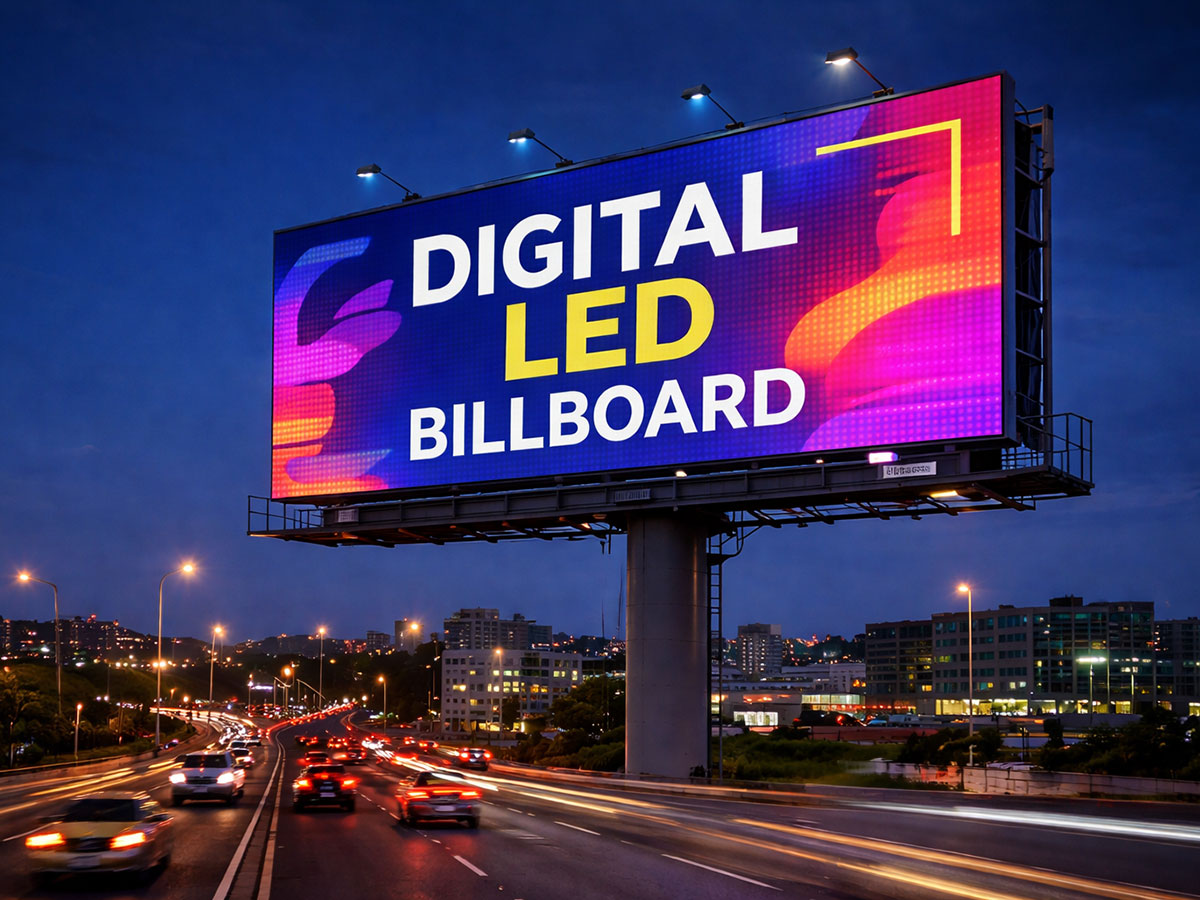
A digital billboard uses an LED screen instead of a printed face. That is why many advertisers refer to these units as LED billboards. Digital billboard advertising allows messages to be uploaded electronically and rotated with other advertisers on a schedule.
Common Characteristics of Digital (LED) Billboards
- Creative is displayed on an LED screen
- Multiple advertisers usually rotate on the same board
- Creative can usually be updated without reprinting
- Often used for short-term, time-sensitive, or flexible campaigns
- Can support multiple messages during the same campaign
Static Billboards vs. Digital Billboards at a Glance
| Feature |
Static Billboards |
Digital / LED Billboards |
| Display Type |
Printed face |
LED screen |
| Message Changes |
Requires reprint and installation |
Can usually be updated electronically |
| Message Rotation |
One advertiser on the face |
Typically rotates among multiple advertisers |
| Campaign Flexibility |
Lower |
Higher |
| Typical Use |
Longer runs, simple branding, steady visibility |
Time-sensitive, dynamic, or multi-message campaigns |
| Production |
Printed vinyl or similar material |
Digital file upload |
| Creative Versions |
Usually one at a time |
Often multiple versions can run |
| Budget Fit |
Often attractive for advertisers seeking constant exposure |
Often attractive for advertisers seeking flexibility and speed |
Advantages of Static Billboards
- Your message stays up continuously on that face
- Can be easier for audiences to absorb when the design is simple and bold
- Often well suited for long-term awareness campaigns
- Can be a practical option for local businesses, ongoing promotions, and directional messaging
- May be preferred when constant presence matters more than creative flexibility
Advantages of Digital / LED Billboards
- Creative can often be changed more quickly
- Multiple messages can rotate during a campaign
- Useful for countdowns, events, deadlines, and daypart messaging
- Often a strong fit for shorter campaign windows
- Can help advertisers test more than one message or call to action
When Static Billboards May Be the Better Choice
Static billboard advertising may be the better option when your message is simple, your campaign is running for an extended period, or you want uninterrupted visibility on a single face. This can work well for brand awareness, location-based messaging, real estate, healthcare, legal advertising, retail, and other campaigns that benefit from steady repetition.
Static billboards may make sense if you want to:
- Maintain the same message for weeks or months
- Focus on a straightforward brand or directional message
- Prioritize constant presence on one billboard face
- Keep the campaign execution simple
A static billboard can be especially effective when the goal is repeated exposure to one clear message over time.
When Digital (LED) Billboards May Be the Better Choice
Digital billboard advertising may be the better choice when timing, flexibility, or message rotation matters. Because digital billboards use LED screens, advertisers can often update artwork more easily and run several creative versions within the same campaign. This can be useful for product launches, event promotion, seasonal offers, voting reminders, entertainment, restaurants, and other time-sensitive advertising.
Digital (LED) billboards may make sense if you want to:
- Promote a campaign with specific dates or changing messages
- Rotate multiple creatives or offers
- Update copy without printing a new billboard face
- Launch quickly in a fast-moving campaign window
Digital billboards, also called LED billboards, are often chosen for flexibility rather than for a single fixed message.
What About Cost?
Cost is one of the biggest reasons advertisers compare static billboards and digital billboards. Pricing can vary widely by market, traffic patterns, unit size, demand, inventory availability, and campaign length. Because of those differences, there is no single answer that applies everywhere.
In general, static billboard campaigns are often evaluated for their constant presence on one face, while digital billboard campaigns are often evaluated for flexibility, scheduling, and rotating exposure. The better value depends on what you need the campaign to accomplish.
A Better Way to Think About Value
Instead of asking only which option costs less, it is often more useful to ask:
- Do I need one message showing full time or several messages rotating?
- Will my creative stay the same or need updates?
- Is this a long-term awareness campaign or a shorter campaign with timing needs?
- Am I prioritizing consistency, flexibility, or speed to market?
So Which Is Better?
Neither format is automatically better in every situation. Static billboards and digital billboards each have strengths. Static can be a smart choice for steady, long-term visibility. Digital (LED) billboards can be a smart choice for adaptable campaigns and time-sensitive messaging.
If your goal is simple, consistent visibility over time, a static billboard may be the better fit. If your goal is flexibility, faster creative changes, or rotating multiple messages, a digital billboard may be the better fit.
Final Takeaway
The best billboard format depends on your message, schedule, budget, and market strategy. Static billboards offer constant presence. Digital billboards, also known as LED billboards, offer flexibility.
A well-planned campaign can succeed with either format when the creative, location, and objectives are aligned.
Need Help Comparing Billboard Options?
If you are comparing static and digital billboard advertising for a specific market, campaign, or budget, it can help to review both options side by side before making a decision.
Get Pricing