Blue Line Media provides access to 1,884 billboard faces in the Washington, DC DMA, spanning Washington DC, suburban Maryland, and Northern Virginia.
Billboard advertising in Washington, DC starts at $2,500 per 4-week period. Static poster billboards in Washington, DC average $3,500 per 4-week period ($2,500–$4,500). Static bulletin billboards average $30,000 ($10,000–$50,000), digital bulletin billboards average $32,500 ($15,000–$50,000), and Wallscape mural billboards average $87,500 ($25,000–$150,000) per 4-week period.
Billboard advertising in Washington, DC has CPMs starting at $4 per 4-week period. Static poster billboard CPMs in Washington, DC average $18 ($13–$23) per 4-week period. Static bulletin billboard CPMs average $57 ($19–$95), digital bulletin billboard CPMs average $45 ($21–$69), and Wallscape mural billboard CPMs average $81 ($23–$138).
Billboard density is highest along Route 301 (40 faces), Baltimore Blvd (20 faces), and Pennsylvania Ave (9 faces), with Wallscape mural billboards, static bulletins, digital bulletins, static posters, and digital posters available across the DMA. The DMA covers Washington DC, suburban Maryland counties, and Northern Virginia, reaching a metro population of approximately 6,400,000.
Washington, DC Billboard Market Snapshot
The Washington, DC billboard market tracked by Blue Line Media includes 1,884 billboard faces, comprising 68 digital (LED) and 1,816 static (printed/mesh) displays. Billboard coverage spans 5+ counties, with the heaviest concentration in Berkeley County, Prince George's County, Allegany County, Washington County and District of Columbia. The market delivers approximately 152,270,065 weekly impressions (age 18+), equivalent to approximately 609,080,260 impressions over a standard 4-week campaign period.
Inventory by Location Type — Washington, DC
Urban — 53%
Suburban — 0%
Rural — 47%
Board Count by County — Washington, DC
County
Billboard Faces
Berkeley County
365
Prince George's County
269
Allegany County
151
Washington County
138
District of Columbia
113
Top Roads by Billboard Density — Washington, DC
Road / Corridor
Billboard Faces
Route 301
40
Baltimore Blvd (US-1)
20
Route 1 (Richmond Hwy)
22
7th Street NW
12
Pennsylvania Ave
9
Sample Billboard Inventory — Washington, DC
Location / Road
Format
Direction
4-Week Imps (Age 18+)
I-695 n/o Exit 1A S. Capitol St, SW/Nationals Park N/S
Wallscape
S
4,017,404
Rt 5 Branch Av
Digital Bulletin
S
3,053,672
301 New York Avenue, NE, DC 20001
Wallscape
N
2,985,148
Rt 301/Rt 5 ES
Static Bulletin
N
2,972,324
6TH STREET NW
Wallscape
E
2,647,560
601 K STREET NW
Wallscape
N
2,622,536
New York Ave e/o N. Capitol St, NE S/S
Wallscape
W
2,495,644
Kenilworth Ave
Static Bulletin
S
2,381,912
Washington, DC Billboard Advertising Market Data
No. of Billboards
1,884
Roads
Route 301 (40 faces) — reaching suburban Maryland commuters, retail shoppers, and travelers along one of the DC DMA’s highest-density billboard corridors, running south through Prince George’s and Charles Counties. Baltimore Blvd (US-1) (20 faces) — reaching commuters and retail audiences along the primary surface artery connecting Washington to Baltimore through College Park, Hyattsville, and Prince George’s County. Route 1 (Richmond Hwy) (22 faces) — reaching Northern Virginia commuters, military and government workers, and retail audiences from Alexandria through Woodbridge and Fredericksburg. 7th Street NW (12 faces) — reaching downtown DC audiences, government workers, and urban business corridors connecting Gallery Place, Penn Quarter, and the National Mall area. Pennsylvania Ave (9 faces) — reaching DC’s most prominent public corridor — government workers, tourists, and national media audiences along the route connecting the US Capitol to the White House. Additional coverage on Greenbelt Road through Prince George’s County, Kenilworth Avenue (DC-295) through Northeast DC and Maryland, Route 5 (Branch Ave) through Prince George’s and Charles Counties, I-66 through Arlington and Fairfax, I-395 through Crystal City and Pentagon City, and Wisconsin Avenue NW through Georgetown and Chevy Chase.
Attractions and Neighborhoods
United States Capitol, White House, National Mall, Adams Morgan, Anacostia, Capitol Hill, Chinatown, Columbia Heights, Dupont Circle, Foggy Bottom, Georgetown, H Street Corridor, Logan Circle, Navy Yard, NoMa, Shaw, Southwest Waterfront, U Street Corridor, Woodley Park, Friendship Heights, Chevy Chase, Bethesda, Silver Spring, Rockville, Gaithersburg, Greenbelt, College Park, Hyattsville, Alexandria, Arlington, Tysons, McLean, Reston, Herndon, Fairfax
How much does billboard advertising cost in Washington, DC?
Billboard advertising in Washington, DC starts at $2,500 per 4-week period. Static poster billboards (medium format) average $3,500 per 4-week period ($2,500–$4,500). Static bulletin billboards (large format, 14'×48') average $30,000 per 4 weeks ($10,000–$50,000). Digital bulletin billboards (LED, large format) average $32,500 per 4 weeks ($15,000–$50,000). Wallscape mural billboards (large-format graphics on building and parking structure exteriors) average $87,500 per 4 weeks ($25,000–$150,000). A $5,000 minimum spend applies and may be spread across multiple boards and flight periods. Premium locations — including key downtown DC corridors, major Beltway interchanges, and high-visibility urban locations in Georgetown, Dupont Circle, and the Capitol Hill area — may be priced above these ranges depending on availability.
What is the CPM for billboard advertising in Washington, DC?
Billboard advertising in Washington, DC has CPMs starting at $4 per 4-week period. Static poster billboards (medium billboards) average $18 CPM ($13–$23) per 4-week period. Static bulletin billboards (large billboards, 14'×48') average $57 CPM ($19–$95). Digital bulletin billboards average $45 CPM ($21–$69). Wallscape mural billboards average $81 CPM ($23–$138), reflecting premium large-format placement in high-traffic government and urban corridors. Digital poster billboards average $6 CPM ($4–$8). CPMs are calculated using the average 4-week impressions (age 18+) for each format across all 1,884 billboard faces in the Washington DC DMA.
How often will people see my billboard in Washington, DC?
A static bulletin in Washington, DC delivers an average of 527,558 impressions (age 18+) over a 4-week campaign period. A digital bulletin delivers an average of 724,360 impressions over the same period. A Wallscape mural billboard delivers an average of 1,089,905 impressions per 4-week period. Commuters on major corridors like Route 301, Baltimore Blvd, and Pennsylvania Ave typically pass the same billboard multiple times per week, making billboards one of the highest-frequency media formats available. Across all 1,884 billboard faces in the Washington DC DMA, the market delivers approximately 609,080,260 total impressions per 4-week period.
What are the best roads for billboard advertising in Washington, DC?
The highest-density billboard corridors in the Washington DC DMA are Route 301 (40 faces), Baltimore Blvd (US-1) (20 faces), Route 1 (Richmond Hwy) (22 faces), 7th Street NW (12 faces), and Pennsylvania Ave (9 faces). Route 301 and Baltimore Blvd (US-1) through suburban Prince George’s County deliver strong reach to Maryland commuters and retail audiences. Route 1 (Richmond Hwy) in Northern Virginia targets government employees, military traffic, and the dense residential corridor running south from Alexandria through Woodbridge. Pennsylvania Avenue and 7th Street NW serve the DC urban core, reaching government workers, lobbyists, media professionals, and politically engaged audiences in one of the most influential media markets in the country. Additional coverage on Greenbelt Road through Prince George’s County, Kenilworth Avenue (DC-295) through Northeast DC and Maryland, Route 5 (Branch Ave) through Prince George’s and Charles Counties, I-66 through Arlington and Fairfax, I-395 through Crystal City and Pentagon City, and Wisconsin Avenue NW through Georgetown and Chevy Chase.
How many billboards are in Washington, DC?
The Washington DC DMA contains 1,884 billboard faces tracked by Blue Line Media across Washington DC, Prince George’s County, Montgomery County, Arlington County, Fairfax County, and surrounding counties. Of these, 68 are digital (LED) and 1,816 are static (printed/mesh), spanning Wallscape mural, bulletin, and poster formats. Billboard coverage reaches 5+ counties in the DMA, with the highest concentrations in Prince George’s County, Charles County, Fairfax County, and Montgomery County.
What types of billboards are available in Washington, DC?
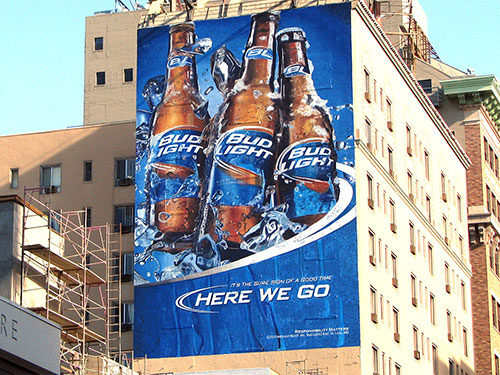
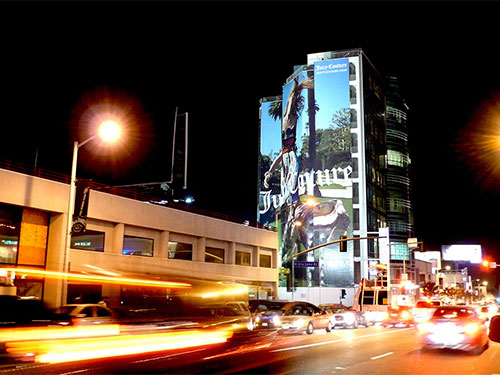
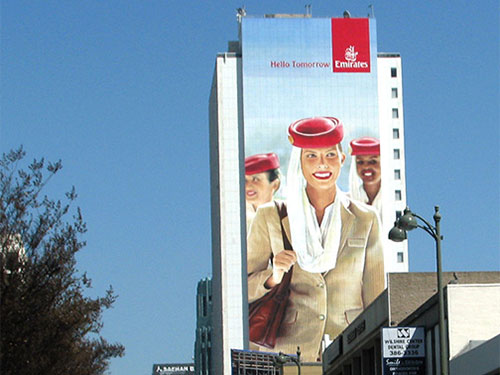
Washington, DC billboard inventory includes Wallscape mural billboards (large-format graphics on building and parking structure exteriors), static bulletins (large format, 14'×48'), digital bulletins (LED, large format), static posters (medium format), and digital posters. Of the 1,884 faces in the Washington DC DMA, 68 are digital (LED) and 1,816 are static (printed/mesh). 53% of inventory is in urban and urban business locations, 0% suburban, and 47% rural, offering flexible targeting across Washington, DC audience densities.
When is the best time to advertise on billboards in Washington, DC?
Peak billboard advertising seasons in Washington, DC are spring (March–May) and fall (September–November). Spring brings the Cherry Blossom Festival (late March/early April), congressional session activity, and heavy tourist traffic to the National Mall — creating high-frequency exposure for both local and national audiences. Fall is driven by Congress returning from recess, diplomatic and policy events, and increased government contractor and lobbying activity. The July 4th holiday generates exceptional downtown DC impressions. January and February are softer periods, offering potential negotiating room on rates and availability. Plan campaigns 4–6 weeks in advance; prime DC locations and Wallscape positions book quickly during political and legislative cycles.
How does billboard advertising work in Washington, DC?
Getting started with billboard advertising in Washington, DC is straightforward:
Get a quote — Tell Blue Line Media your target area, budget, and campaign dates.
Choose your billboard — Blue Line Media recommends available billboard locations matching your audience and flight.
Provide creative or use our free design service.
Go live — Boards are posted and your campaign runs for your contracted flight period.
What size are billboards in Washington, DC?
Billboard sizes in Washington, DC follow industry-standard dimensions. Static bulletin billboards (large format) measure 14 feet high by 48 feet wide (14'×48'). Static poster billboards (medium format) measure 10.5 feet high by 22.75 feet wide (10.5'×22.75'). Digital bulletin billboards and digital poster billboards share the same dimensions as their static counterparts. Wallscape mural billboards are printed or mesh graphics mounted to building and parking structure exteriors; sizes vary by building face, ranging from a few hundred to several thousand square feet.
How far in advance do I need to book billboard advertising in Washington, DC?
As soon as possible, because advertising is sold on a first come, first served basis. Availability changes daily as campaigns book and end.
Creative Due Dates:
Static (Print): 2–3 weeks prior to ad start date. May be reduced in certain cases.
Digital: 3 business days prior to ad start date.
Can I target specific neighborhoods or areas with billboard advertising in Washington, DC?
Yes. The Washington DC DMA covers a large multi-state region, allowing precise geographic targeting by sub-market. Downtown DC corridors (Pennsylvania Ave, K Street NW, 7th Street NW) reach government workers, lobbyists, and media professionals. Northern Virginia (Alexandria, Arlington, Tysons, Fairfax) targets federal contractors, tech-sector employees, and dense Northern Virginia suburban households. Suburban Maryland (Bethesda, Silver Spring, College Park, Prince George’s County) reaches a diverse mix of government and university-affiliated audiences. The Route 301 and Route 1 corridors in southern Maryland and Northern Virginia reach commuter and retail audiences across Charles, Prince George’s, and Stafford Counties.
What are the most popular billboard locations in Washington, DC?
Among the most-viewed billboard corridors in the Washington DC DMA are Route 301, a high-density suburban Maryland corridor through Prince George’s and Charles Counties (40 faces), Baltimore Blvd (US-1), the primary surface artery between Washington and Baltimore through College Park and Hyattsville (20 faces), Route 1 (Richmond Hwy), the Northern Virginia commuter and retail corridor from Alexandria to Woodbridge (22 faces), 7th Street NW, the downtown DC urban core corridor connecting Gallery Place and the National Mall (12 faces), and Pennsylvania Ave, DC’s iconic national boulevard connecting the US Capitol to the White House (9 faces). Blue Line Media can recommend specific billboard positions — including Wallscape mural locations — on these and other corridors based on current availability.
One call to Blue Line Media provides us with any advertising option in any city across the country.
Matt FreemanPETA
Blue Line Media has executed multiple government PSA campaigns in multiple U.S. cities, thereby giving our clients a truly national reach.
Sarah ParadaPorter Novelli
Working with Blue Line Media is a delight.
Judith DeCampACS Quantum
Blue Line Media is extremely helpful in delivering advertising media in any city we want across the country.
Sheldon de SouzaBetter World Advertising
Copyright 2026 Blue Line Media Inc
Not all images represent ads placed by Blue Line Media. Images may be subject to copyright. Names and trade and service marks are property of their owners and are not intended to endorse Blue Line Media.
In accordance with its Accessibility Statement, Blue Line Media is committed to ensuring accessibility of its website. To report an accessibility issue, request accessibility assistance regarding website content, or to request a specific electronic format, please contact the accessibility coordinator at 800-807-0360 or complete the form. Reasonable efforts will be made to accommodate all needs.
By using this website, you consent to the placement and storing of cookies on your computer by this website. These cookies are used to collect information about how you interact with our website and allow us to remember you. We use this information in order to improve and customize your browsing experience and for analytics and metrics about our visitors both on this website and other media. To find out more about the cookies we use, see our Privacy Policy.