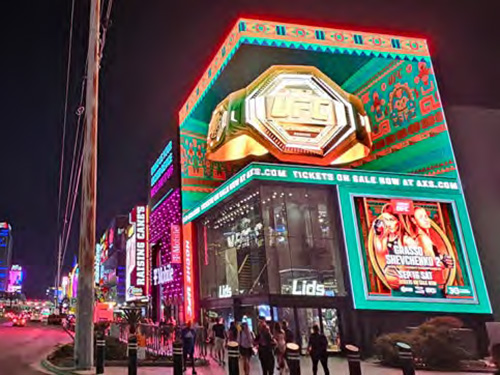
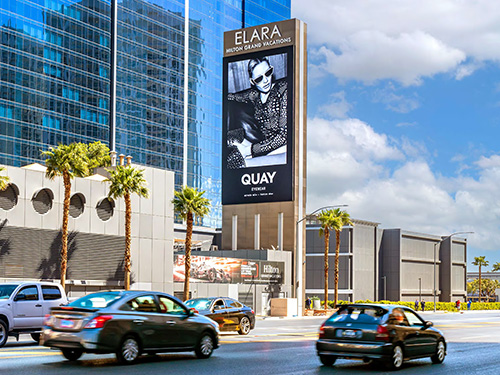
Map of St. Louis Billboards

Zoom in/out on map to see more.


St. Louis, MO Billboard Advertising Rates

  • $5,000 minimum spend which may be spread over displays and periods.
  • Get pricing: Pricing
Format Rate / Period (4 wks, est.) Avg. Imps (Age 18+) CPM (est.)
Bulletin (Large Billboard) Static $2,000–$5,500 605,581 $3–$9
Digital Bulletin (Large Digital Billboard) Digital $2,000–$5,500 747,347 $3–$7
Poster (Medium Billboard) Static $1,000–$1,500 218,312 $5–$7
Digital Poster (Medium Digital Billboard) Digital $1,500–$2,000 179,157 $8–$11

The St. Louis DMA spans both sides of the Missouri-Illinois border, with 3,976 billboard faces tracked by Blue Line Media across St. Louis City, St. Louis County, St. Charles County, Jefferson County, and the Metro East Illinois counties of St. Clair and Madison.

Billboard advertising in St. Louis starts at $1,000 per 4-week period. Static poster billboards in St. Louis average $1,250 per 4-week period ($1,000–$1,500). Static bulletin billboards average $3,750 ($2,000–$5,500) and digital bulletin billboards average $3,750 ($2,000–$5,500) per 4-week period.

Billboard advertising in St. Louis has CPMs starting at $3 per 4-week period. Static poster billboard CPMs in St. Louis average $6 ($5–$7) per 4-week period. Static bulletin billboard CPMs average $6 ($3–$9) and digital bulletin billboard CPMs average $5 ($3–$7).

Billboard density is highest along I-44 (143 faces), I-55 (13 faces), and I-70 (9 faces). The DMA spans the bi-state St. Louis metro from the Missouri Ozarks fringe in the west to the Metro East Illinois suburbs in the east, encompassing a diverse mix of urban, suburban, and exurban communities across both Missouri and Illinois.


St. Louis, MO Billboard Market Snapshot

The St. Louis, MO billboard market tracked by Blue Line Media includes 3,976 billboard faces, comprising 113 digital (LED) and 3,863 static (printed/mesh) displays. Billboard coverage spans 5+ counties, with the heaviest concentration in St. Louis County, St. Louis city, St. Clair County, St. Charles County and Franklin County. The market delivers approximately 523,859,040 weekly impressions (age 18+), equivalent to approximately 2,095,436,160 impressions over a standard 4-week campaign period.


Inventory by Location Type — St. Louis, MO

Urban — 61%
Suburban — 0%
Rural — 39%

Board Count by County — St. Louis, MO

CountyBillboard Faces
St. Louis County 765
St. Louis city 451
St. Clair County 412
St. Charles County 321
Franklin County 276

Top Roads by Billboard Density — St. Louis, MO

Road / CorridorBillboard Faces
I-44 143
I-55 13
US 67 12
I-70 9
I-270 6

Sample Billboard Inventory — St. Louis, MO

Location / Road Format Direction 4-Week Imps (Age 18+)
I-70 0.4 mi E/O Adelaide Exit #246B SS Static Bulletin NW 3,519,728
WEST SIDE OF I-270 @ MISSOURI BOTTOM ROAD N/B Static Bulletin SW 3,061,748
I-270 200.00 ft W/O I-55 S/S Static Bulletin NE 2,997,160
Hwy 40 0.4 mi E/O Broadway Exit 40B SS Static Bulletin W 2,826,684
I-270 800.00 ft S/O Olive E/S Static Bulletin N 2,781,444
I-44 200.00 ft W/O Kingshighway N/S Static Bulletin E 2,709,228
I-70 1.2 mi E/O St. Louis Lambert Airport Exit SS Static Bulletin W 2,606,544
I-44 500.00 ft W/O Hampton Ave S/S Static Bulletin E 2,356,652

St. Louis, MO Billboard Advertising Market Data

No. of Billboards 3,976
Roads I-44 (143 faces) — the dominant billboard corridor in the St. Louis DMA, running southwest from downtown St. Louis through South St. Louis, Fenton, and Eureka toward Springfield and the Ozarks, with 143 faces making it by far the highest-density freeway corridor in the market and reaching a broad mix of urban, suburban, and regional travel audiences. I-55 (13 faces) — a key north-south freeway connecting downtown St. Louis to South County and the St. Louis metro through to Springfield, IL, reaching commuters, freight traffic, and suburban communities along one of the metro’s busiest industrial and residential corridors. US 67 (12 faces) — a primary north-south arterial connecting St. Louis through north St. Louis County, Florissant, and the communities along the Missouri/Illinois border, reaching residential commuters, retail shoppers, and north county suburban audiences. I-70 (9 faces) — the primary east-west freeway through the St. Louis metro connecting downtown to St. Charles County and the far west suburbs, as well as reaching east to the Illinois market, ideal for cross-metro campaigns and regional brand awareness targeting both the Missouri and Illinois sides of the DMA. I-270 (6 faces) — the outer beltway connecting north and west St. Louis County through the affluent suburban communities of Chesterfield, Creve Coeur, and Maryland Heights, reaching high-income suburban commuters, corporate park audiences, and regional shoppers along one of the metro’s fastest-growing commercial corridors. Additional coverage on I-64 (US 40) through Clayton, the Central West End, and the western suburbs; SR-21 through south St. Louis County and Jefferson County; I-170 through University City and Overland; and Route 143 through St. Charles County.
Attractions and Neighborhoods Anheuser-Busch, Benton Park, Benton Park West, Bevo Mill, Botanical Heights, Boulevard Heights, Carondelet, Central West End, Cheltenham, Clayton-Tamm (Dogtown), Clifton Heights, Columbus Square, Compton Heights, Downtown, Downtown West, Dutchtown, Ellendale, Fairground, Forest Park Southeast (The Grove), Fountain Park, Fox Park, Franz Park, Gravois Park, Greater Ville, Hi-Pointe, Hill, Hyde Park, JeffVanderLou, Kings Oak, Kingsway East, Kingsway West, Kosciusko, Lafayette Square, LaSalle Park, Lewis Place, Lindenwood Park, Marine Villa, Mark Twain, Mark Twain/I-70 Industrial, McKinley Heights, Midtown, Mount Pleasant, Near North Riverfront, North Hampton, North Point, O'Fallon, Old North St. Louis, Patch, Peabody-Darst-Webbe, Penrose, Princeton Heights, Riverview, Shaw, Skinker DeBaliviere, Soulard, Southwest Garden, St. Louis Hills, St. Louis Place, Tiffany, Tower Grove East, Tower Grove South, Vandeventer, Visitation Park, Walnut Park East, Walnut Park West, Wells/Goodfellow, Wydown/Skinker
Population 2,800,000
DMA No. 21
Race White 76%
Black 16%
Hispanic 4%
Asian / Other 4%
Median Income $65,000
Median Age 38
Zip Codes 63101 63102 63103 63104 63105 63106 63107 63108 63109 63110 63111 63112 63113 63115 63116 63117 63118 63120 63123 63125 63130 63133 63136 63137 63138 63139 63143 63147 63150 63155 63156 63157 63158 63160 63163 63164 63166 63169 63171 63177 63178 63179 63180 63182 63188 63195 63197 63199

Billboard Advertising FAQ — St. Louis, MO

How much does billboard advertising cost in St. Louis, MO?

Billboard advertising in St. Louis starts at $1,000 per 4-week period. Static poster billboards (medium format) average $1,250 per 4-week period ($1,000–$1,500). Static bulletin billboards (large format, 14'×48') average $3,750 per 4 weeks ($2,000–$5,500). Digital bulletin billboards (LED, large format) average $3,750 per 4 weeks ($2,000–$5,500). A $5,000 minimum spend applies and may be spread across multiple boards and flight periods. Premium locations — including key I-44 interchanges in South St. Louis, I-70 through downtown, and high-visibility urban corridors along Grand Boulevard and Jefferson Avenue — may be priced above these ranges depending on availability.

What is the CPM for billboard advertising in St. Louis, MO?

Billboard advertising in St. Louis has CPMs starting at $3 per 4-week period. Static poster billboards (medium billboards) average $6 CPM ($5–$7) per 4-week period. Static bulletin billboards (large billboards, 14'×48') average $6 CPM ($3–$9). Digital bulletin billboards average $5 CPM ($3–$7). Digital poster billboards average $10 CPM ($8–$11). CPMs are calculated using the average 4-week impressions (age 18+) for each format across all 3,976 billboard faces in the St. Louis DMA.

How often will people see my billboard in St. Louis, MO?

A static bulletin in St. Louis delivers an average of 605,581 impressions (age 18+) over a 4-week campaign period. A digital bulletin delivers an average of 747,347 impressions over the same period. Commuters on major corridors like I-44, I-55, and I-70 typically pass the same billboard multiple times per week, making billboards one of the highest-frequency media formats available. Across all 3,976 billboard faces in the St. Louis DMA, the market delivers approximately 2,095,436,160 total impressions per 4-week period.

What are the best roads for billboard advertising in St. Louis, MO?

The highest-density billboard corridors in the St. Louis DMA are I-44 (143 faces), I-55 (13 faces), US 67 (12 faces), I-70 (9 faces), and I-270 (6 faces). I-44 is by far the dominant corridor in the market with the highest face count of any freeway, offering the broadest reach across the metro from South St. Louis through the suburban ring to the Ozark fringe — ideal for any campaign seeking maximum St. Louis DMA coverage. I-55 reaches South County and the Illinois market and is well-suited for regional and industrial campaigns. US 67 covers the north county residential and retail corridor from Florissant to the Missouri/Illinois border. I-70 runs through the heart of the metro connecting downtown St. Louis to St. Charles County and is ideal for cross-metro brand awareness. I-270 targets the affluent west and north suburban ring through Chesterfield, Creve Coeur, and Maryland Heights and is especially effective for corporate and professional-service campaigns. Additional coverage on I-64 (US 40) through Clayton, the Central West End, and the western suburbs; SR-21 through south St. Louis County and Jefferson County; I-170 through University City and Overland; and Route 143 through St. Charles County.

How many billboards are in St. Louis, MO?

The St. Louis DMA contains 3,976 billboard faces tracked by Blue Line Media across St. Louis City, St. Louis County, St. Charles County, Jefferson County, and surrounding Missouri and Illinois counties. Of these, 113 are digital (LED) and 3,863 are static (printed/mesh), spanning bulletin and poster formats. Billboard coverage reaches 5+ counties in the DMA, with the highest concentrations in St. Louis County, which contains the majority of the metro’s suburban communities and commercial corridors, and St. Louis City, which contains the downtown core and the most densely populated urban neighborhoods.

What types of billboards are available in St. Louis, MO?

St. Louis billboard inventory includes static bulletins (large format, 14'×48'), digital bulletins (LED, large format), static posters (medium format), and digital posters. Of the 3,976 faces in the St. Louis DMA, 113 are digital (LED) and 3,863 are static (printed/mesh). 61% of inventory is in urban and urban business locations, 0% suburban, and 39% rural, offering flexible targeting across St. Louis audience densities.

When is the best time to advertise on billboards in St. Louis, MO?

The St. Louis DMA sees peak billboard demand in spring (March–May) and early fall (September–October), when commuter traffic is highest and the outdoor advertising season is in full swing. Summer (June–August) is also strong, driven by Cardinals baseball at Busch Stadium, Blues hockey playoffs, and major events at the America’s Center convention complex. The off-peak window in January–February typically offers better inventory availability and negotiating flexibility before spring demand picks up. Key local events that drive billboard activity include the St. Louis Cardinals season (April–October), the St. Louis Blues NHL season, and the Fair Saint Louis celebration in July. A 2–3 week lead time is standard for most placements; book earlier for high-demand I-44 and downtown corridor locations.

How does billboard advertising work in St. Louis, MO?

Getting started with billboard advertising in St. Louis is straightforward:

  1. Get a quote — Tell Blue Line Media your target area, budget, and campaign dates.
  2. Choose your billboard — Blue Line Media recommends available billboard locations matching your audience and flight.
  3. Provide creative or use our free design service.
  4. Go live — Boards are posted and your campaign runs for your contracted flight period.

What size are billboards in St. Louis, MO?

Billboard sizes in St. Louis follow industry-standard dimensions. Static bulletin billboards (large format) measure 14 feet high by 48 feet wide (14'×48'). Static poster billboards (medium format) measure 10.5 feet high by 22.75 feet wide (10.5'×22.75'). Digital bulletin billboards and digital poster billboards share the same dimensions as their static counterparts.

How far in advance do I need to book billboard advertising in St. Louis, MO?

As soon as possible, because advertising is sold on a first come, first served basis. Availability changes daily as campaigns book and end.

Creative Due Dates:

  • Static (Print): 2–3 weeks prior to ad start date. May be reduced in certain cases.
  • Digital: 3 business days prior to ad start date.

Can I target specific neighborhoods or areas with billboard advertising in St. Louis, MO?

Yes. Blue Line Media can target specific sub-markets throughout the St. Louis DMA, including downtown St. Louis and Midtown for urban professional and government audiences; South St. Louis and Soulard for dense residential and entertainment district campaigns; Clayton and the Central West End for upscale retail and corporate audiences; Chesterfield and the west county corridor for affluent suburban and professional campaigns along I-270 and I-64; north St. Louis County and Florissant along US 67 for residential and retail reach; and the Metro East Illinois market across the river for cross-state DMA campaigns.

What are the most popular billboard locations in St. Louis, MO?

Among the most-viewed billboard corridors in the St. Louis DMA are I-44, the dominant southwest freeway through South St. Louis carrying heavy commuter and regional travel traffic toward the Ozarks (143 faces), I-55, the south-side freeway connecting downtown through South County to the Illinois metro (13 faces), US 67, the north county arterial through Florissant and the communities near the Missouri/Illinois border (12 faces), I-70, the east-west freeway through downtown connecting the Missouri and Illinois sides of the DMA (9 faces), and I-270, the west suburban beltway through Chesterfield, Creve Coeur, and Maryland Heights (6 faces). Blue Line Media can recommend specific billboard positions on these and other corridors based on current availability.

Blue Line Media logo

Copyright 2026 Blue Line Media Inc

Not all images represent ads placed by Blue Line Media. Images may be subject to copyright. Names and trade and service marks are property of their owners and are not intended to endorse Blue Line Media.

In accordance with its Accessibility Statement, Blue Line Media is committed to ensuring accessibility of its website. To report an accessibility issue, request accessibility assistance regarding website content, or to request a specific electronic format, please contact the accessibility coordinator at 800-807-0360 or complete the form. Reasonable efforts will be made to accommodate all needs.

By using this website, you consent to the placement and storing of cookies on your computer by this website. These cookies are used to collect information about how you interact with our website and allow us to remember you. We use this information in order to improve and customize your browsing experience and for analytics and metrics about our visitors both on this website and other media. To find out more about the cookies we use, see our Privacy Policy.

The Geopath Audience Location Measurement data is provided by the GeoPath, Inc. New York, New York. © Copyright 2026 All Rights Reserved.

Certain info and images may be AI-generated. Double-check important info and images.

BACK TO TOP