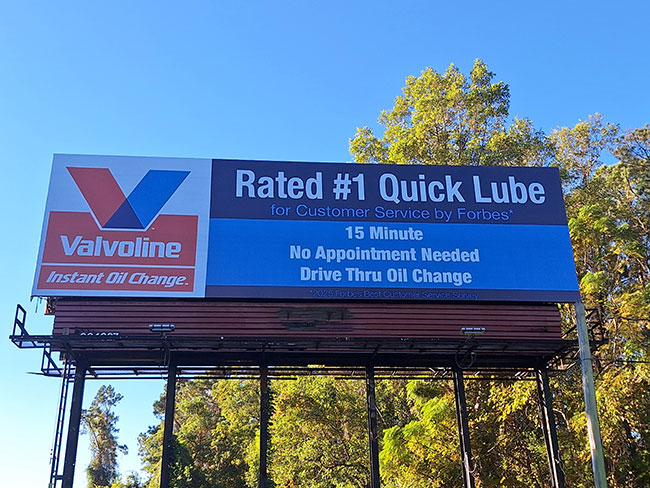
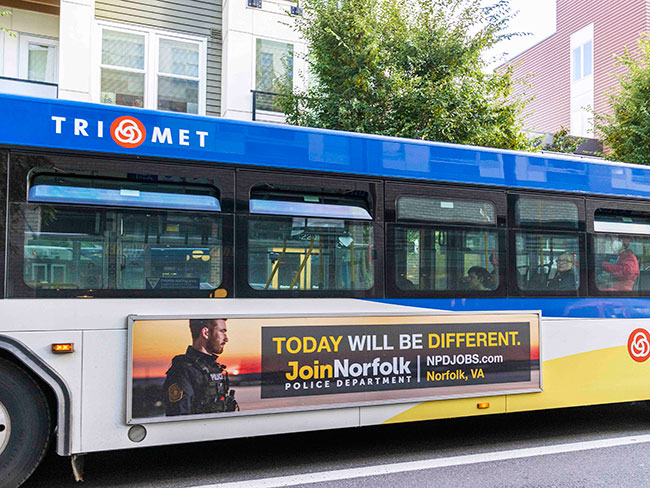
The Seattle-Tacoma DMA is the Pacific Northwest’s primary billboard market, with 2,120 billboard faces spanning King County, Pierce County, Snohomish County, and surrounding counties across the greater Seattle-Tacoma metro.
Billboard advertising in Seattle-Tacoma starts at $2,000 per 4-week period. Static poster billboards in Seattle-Tacoma average $3,500 per 4-week period ($2,000–$5,000). Static bulletin billboards average $11,000 ($6,500–$15,500), digital bulletin billboards average $11,000 ($6,500–$15,500), and Wallscape mural billboards average $30,000 ($10,000–$50,000) per 4-week period.
Billboard advertising in Seattle-Tacoma has CPMs starting at $6 per 4-week period. Static poster billboard CPMs in Seattle-Tacoma average $11 ($6–$16) per 4-week period. Static bulletin billboard CPMs average $22 ($13–$31), digital bulletin billboard CPMs average $15 ($9–$21), and Wallscape mural billboard CPMs average $43 ($14–$71).
Billboard density is highest along I-5 (5 faces), State Route 167 (3 faces), and the West Seattle Bridge (3 faces), with Wallscape mural billboards, static bulletins, digital bulletins, static posters, and digital posters available across the DMA. The DMA spans the greater Seattle-Tacoma metro including Bellevue, Redmond, Kirkland, Everett, and Shoreline in King and Snohomish Counties, and Tacoma, Lakewood, Puyallup, and Auburn in Pierce County and southern King County.
Seattle-Tacoma, WA Billboard Market Snapshot
The Seattle-Tacoma, WA billboard market tracked by Blue Line Media includes 2,120 billboard faces, comprising 60 digital (LED) and 2,060 static (printed/mesh) displays. Billboard coverage spans 5+ counties, with the heaviest concentration in King County, Pierce County, Snohomish County, Chelan County and Thurston County. The market delivers approximately 205,888,646 weekly impressions (age 18+), equivalent to approximately 823,554,584 impressions over a standard 4-week campaign period.
Inventory by Location Type — Seattle-Tacoma, WA
Urban — 92%
Suburban — 0%
Rural — 8%
Board Count by County — Seattle-Tacoma, WA
County
Billboard Faces
King County
828
Pierce County
644
Snohomish County
229
Chelan County
61
Thurston County
61
Top Roads by Billboard Density — Seattle-Tacoma, WA
Road / Corridor
Billboard Faces
I-5 (Interstate 5)
5
State Route 167 (Valley Freeway)
3
West Seattle Bridge
3
Lake City Way NE
3
Alaskan Way (Downtown Seattle Waterfront)
3
Sample Billboard Inventory — Seattle-Tacoma, WA
Location / Road
Format
Direction
4-Week Imps (Age 18+)
4TH AV S WL 52F S/O S WASHINGTON ST SF-1 (TRIVISION)
Static Bulletin
S
5,278,740
4TH AVENUE
Wallscape
SW
3,977,512
I-5 NL 50F E/O PORTLAND AV WF-1
Digital Bulletin
W
3,761,280
NE 124TH ST NL 1250F W/O WILLOWS RD WF-1 (TRIVISION)
Static Bulletin
W
3,260,332
2ND AVE
Wallscape
NW
3,226,872
I-5 NL 100F S/O PUYALLUP RIVER OVERPASS WF-1
Static Bulletin
SW
3,224,216
I-5 NL 50F E/O PORTLAND AV EF-2
Static Bulletin
E
3,169,992
E LAKE SAMMAMISH PKWY SE EL 104F N/O 229TH AV SE SF-2 (TRIVISION)
Static Poster
S
3,015,752
Seattle-Tacoma, WA Billboard Advertising Market Data
No. of Billboards
2,120
Roads
I-5 (Interstate 5) (5 faces) — reaching the DMA’s single highest-face-count freeway corridor, running north-south through the heart of downtown Seattle and Tacoma and connecting the full length of the metro from the Canadian border through Everett, Seattle, Federal Way, and Tacoma to the state border, carrying the broadest cross-section of commuters, freight traffic, and regional travelers in the Pacific Northwest. State Route 167 (Valley Freeway) (3 faces) — reaching South King County commuters, the Auburn-Kent-Renton employment corridor, and warehouse and logistics workers in the Green River Valley along the primary freeway connecting the I-405 Renton interchange south through Kent, Auburn, and Puyallup toward Tacoma, serving one of the DMA’s largest industrial and manufacturing workforce audiences. West Seattle Bridge (3 faces) — reaching West Seattle residents, Harbor Island industrial workers, and Puget Sound waterfront commuters on the primary access corridor connecting West Seattle’s 100,000+ residents to downtown Seattle and I-5, capturing a captive high-frequency audience with no alternate route alternatives. Lake City Way NE (3 faces) — reaching North Seattle and Shoreline residents, University District–bound commuters, and northeast Seattle neighborhood audiences along one of the DMA’s most billboard-dense surface corridors, running northeast from the University District through Wedgwood, Lake City, and Kenmore toward the Lake Washington shoreline. Alaskan Way (Downtown Seattle Waterfront) (3 faces) — reaching downtown Seattle workers, Pike Place Market and waterfront visitors, cruise ship passengers at Smith Cove and the Bell Street Pier, and Puget Sound ferry commuters along the DMA’s signature downtown waterfront surface boulevard, offering premium visibility to one of the highest-pedestrian-count corridors in the Pacific Northwest. Additional coverage on I-405 (Eastside Freeway) through Bellevue, Kirkland, and Renton serving the eastside technology corridor, SR-99 (Aurora Avenue N) through North Seattle and Shoreline, SR-520 (Evergreen Point Floating Bridge) connecting Seattle to the Microsoft and Amazon Eastside campuses in Bellevue and Redmond, I-90 (Homer M. Hadley Memorial Bridge) connecting Seattle to Mercer Island and Bellevue, and SR-509 serving the SeaTac and Burien corridor near Seattle-Tacoma International Airport.
Attractions and Neighborhoods
Pike Place Market, Space Needle, Puget Sound, Chihuly Garden and Glass, Museum of Pop Culture,
Seattle Center, Lumen Field, T-Mobile Park, Climate Pledge Arena;
Admiral, Alki, Ballard, Beacon Hill, Belltown, Capitol Hill, Central District, Columbia City,
Crown Hill, Delridge, Denny Triangle, Downtown Seattle, Eastlake, First Hill, Fremont, Georgetown,
Green Lake, Greenwood, Interbay, International District, Laurelhurst, Lower Queen Anne, Madison Park,
Magnolia, Montlake, Mount Baker, Northgate, Pioneer Square, Queen Anne, Rainier Beach, Ravenna,
Roosevelt, South Lake Union, University District, Wallingford, West Seattle;
Bellevue, Redmond, Kirkland, Bothell, Everett, Shoreline, Renton, Kent, Auburn,
Federal Way, Tacoma, Lakewood, Puyallup, Gig Harbor
How much does billboard advertising cost in Seattle-Tacoma, WA?
Billboard advertising in Seattle-Tacoma starts at $2,000 per 4-week period. Static poster billboards (medium format) average $3,500 per 4-week period ($2,000–$5,000). Static bulletin billboards (large format, 14'×48') average $11,000 per 4 weeks ($6,500–$15,500). Digital bulletin billboards (LED, large format) average $11,000 per 4 weeks ($6,500–$15,500). Wallscape mural billboards (large-format graphics on building and parking structure exteriors) average $30,000 per 4 weeks ($10,000–$50,000). A $5,000 minimum spend applies and may be spread across multiple boards and flight periods. Premium locations — including high-traffic I-5 interchange positions through downtown Seattle, Wallscape mural locations in South Lake Union, Capitol Hill, and Belltown, and the West Seattle Bridge corridor — may be priced above these ranges depending on availability.
What is the CPM for billboard advertising in Seattle-Tacoma, WA?
Billboard advertising in Seattle-Tacoma has CPMs starting at $6 per 4-week period. Static poster billboards (medium billboards) average $11 CPM ($6–$16) per 4-week period. Static bulletin billboards (large billboards, 14'×48') average $22 CPM ($13–$31). Digital bulletin billboards average $15 CPM ($9–$21). Wallscape mural billboards average $43 CPM ($14–$71), reflecting prime large-format placement on high-visibility building faces in Seattle’s downtown core, South Lake Union technology corridor, and Capitol Hill. Digital poster billboards average $14 CPM ($12–$16). CPMs are calculated using the average 4-week impressions (age 18+) for each format across all 2,120 billboard faces in the Seattle DMA.
How often will people see my billboard in Seattle-Tacoma, WA?
A static bulletin in Seattle-Tacoma delivers an average of 501,617 impressions (age 18+) over a 4-week campaign period. A digital bulletin delivers an average of 755,170 impressions over the same period. A Wallscape mural billboard delivers an average of 705,517 impressions per 4-week period. Commuters on major corridors like I-5, State Route 167, and the West Seattle Bridge typically pass the same billboard multiple times per week, making billboards one of the highest-frequency media formats available. Across all 2,120 billboard faces in the Seattle DMA, the market delivers approximately 823,554,584 total impressions per 4-week period.
What are the best roads for billboard advertising in Seattle-Tacoma, WA?
The highest-density billboard corridors in the Seattle DMA are I-5 (Interstate 5) (5 faces), State Route 167 (Valley Freeway) (3 faces), West Seattle Bridge (3 faces), Lake City Way NE (3 faces), and Alaskan Way (Downtown Seattle Waterfront) (3 faces). I-5 is the undisputed anchor of the Seattle DMA billboard market — it is the only north-south freeway connecting downtown Seattle to Tacoma with no parallel freeway alternative, making it essential for campaigns requiring true DMA-wide reach from the Northgate and Shoreline corridor through downtown Seattle’s SLU and Capitol Hill exits south to Federal Way and Tacoma. State Route 167 is the most cost-effective high-frequency corridor for reaching the South King County manufacturing and logistics workforce in Kent, Auburn, and Renton — the DMA’s largest blue-collar and trades audience concentrated in the Green River Valley industrial belt. The West Seattle Bridge captures a captive daily audience of 100,000+ West Seattle residents with minimal alternate routes, making it one of the highest-frequency exposure corridors in the metro — ideal for home services, retail, healthcare, and consumer brand campaigns targeting an established homeowner demographic. Lake City Way NE reaches the North Seattle and Shoreline residential corridor including the University District student and faculty population, ideal for education, healthcare, food and beverage, and professional services campaigns. Alaskan Way targets the downtown waterfront tourism, hospitality, and cruise industry audience, delivering peak impressions during the summer cruise season and Pike Place Market peak visitor months.
How many billboards are in Seattle-Tacoma, WA?
The Seattle DMA contains 2,120 billboard faces tracked by Blue Line Media across King County, Pierce County, Snohomish County, and surrounding counties. Of these, 60 are digital (LED) and 2,060 are static (printed/mesh), spanning Wallscape mural, bulletin, and poster formats. Billboard coverage reaches 5+ counties in the DMA, with the highest concentrations in King County, which contains Seattle, Bellevue, Redmond, Kirkland, Kent, Auburn, and Renton, and Pierce County, which contains Tacoma, Lakewood, and Puyallup.
What types of billboards are available in Seattle-Tacoma, WA?
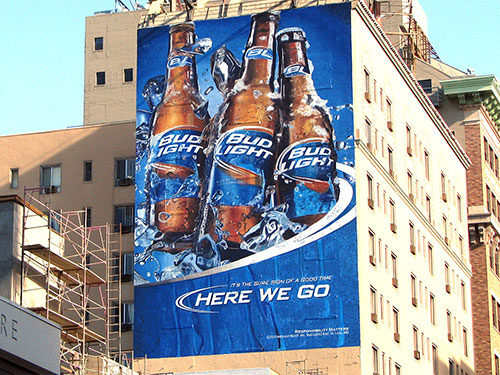
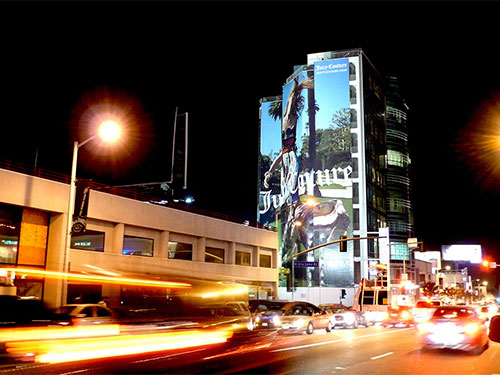
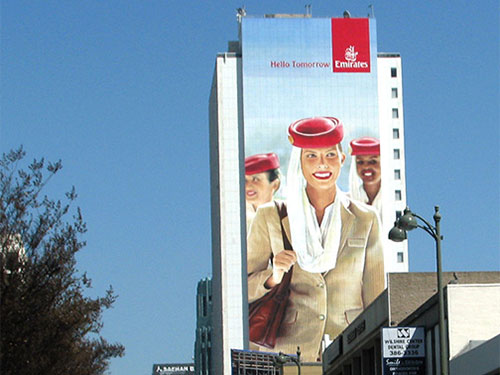
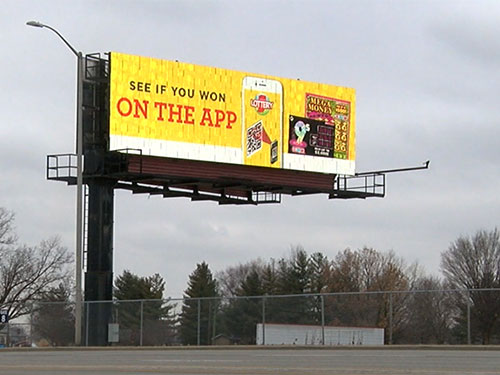
Seattle-Tacoma billboard inventory includes Wallscape mural billboards (large-format graphics on building and parking structure exteriors), static bulletins (large format, 14'×48'), digital bulletins (LED, large format), static posters (medium format), and digital posters. Of the 2,120 faces in the Seattle DMA, 60 are digital (LED) and 2,060 are static (printed/mesh). 92% of inventory is in urban and urban business locations, 0% suburban, and 8% rural, offering flexible targeting across Seattle-Tacoma audience densities.
When is the best time to advertise on billboards in Seattle-Tacoma, WA?
Billboard demand in Seattle-Tacoma is strong year-round, driven by one of the highest median household incomes of any major U.S. metro and a large daily commuter population, but two windows stand out. The primary peak season runs from late April through September — Seattle’s extended summer brings dramatically higher foot traffic in downtown, Capitol Hill, Ballard, and the waterfront, with peak tourism at Pike Place Market and the Seattle Center, Seahawks and Mariners home schedules driving predictable high-traffic event windows, and major events including Seafair (August), Bite of Seattle (July), and Bumbershoot (Labor Day weekend). The technology industry hiring cycles of January through March also drive a secondary billboard demand spike as Amazon, Microsoft, Google, and Boeing-corridor companies launch recruiting campaigns targeting the DMA’s large technology-professional workforce. The November through February rainy season is generally the softest demand window — reduced outdoor pedestrian activity makes this the best period to negotiate rates and secure premium I-5 and waterfront positions. For I-5 freeway positions and Wallscape locations in downtown Seattle, plan 4–6 weeks in advance; high-visibility downtown waterfront and South Lake Union positions during summer peak may require 8–10 weeks of lead time.
How does billboard advertising work in Seattle-Tacoma, WA?
Getting started with billboard advertising in Seattle-Tacoma is straightforward:
Get a quote — Tell Blue Line Media your target area, budget, and campaign dates.
Choose your billboard — Blue Line Media recommends available billboard locations matching your audience and flight.
Provide creative or use our free design service.
Go live — Boards are posted and your campaign runs for your contracted flight period.
What size are billboards in Seattle-Tacoma, WA?
Billboard sizes in Seattle-Tacoma follow industry-standard dimensions. Static bulletin billboards (large format) measure 14 feet high by 48 feet wide (14'×48'). Static poster billboards (medium format) measure 10.5 feet high by 22.75 feet wide (10.5'×22.75'). Digital bulletin billboards and digital poster billboards share the same dimensions as their static counterparts. Wallscape mural billboards are printed or mesh graphics mounted to building and parking structure exteriors; sizes vary by building face, ranging from a few hundred to several thousand square feet.
How far in advance do I need to book billboard advertising in Seattle-Tacoma, WA?
As soon as possible, because advertising is sold on a first come, first served basis. Availability changes daily as campaigns book and end.
Creative Due Dates:
Static (Print): 2–3 weeks prior to ad start date. May be reduced in certain cases.
Digital: 3 business days prior to ad start date.
Can I target specific neighborhoods or areas with billboard advertising in Seattle-Tacoma, WA?
Yes — the Seattle DMA offers distinct sub-markets for targeted billboard campaigns. Downtown Seattle and South Lake Union target the DMA’s highest-concentration technology professional audience — Amazon’s headquarters campus, Google and Meta Seattle offices, and the rapidly expanding startup corridor — with Wallscape mural opportunities on building faces in SLU and Belltown reaching six-figure-income tech workers during their daily commute. The Capitol Hill and First Hill corridor reaches the DMA’s largest young adult concentration along with Swedish, Virginia Mason, and Group Health hospital workers, ideal for healthcare, entertainment, food and beverage, and lifestyle brands. The Eastside corridor — Bellevue, Redmond, and Kirkland along I-405 and SR-520 — reaches the DMA’s highest-income households, the Microsoft campus workforce, and the Bellevue luxury retail and hospitality audience. West Seattle along the West Seattle Bridge captures an established homeowner demographic with above-average household income, ideal for home services, financial planning, and healthcare. The South King County corridor — Kent, Auburn, Renton, and Federal Way along I-5 and SR-167 — reaches the DMA’s manufacturing, logistics, and trades workforce at generally lower billboard CPMs than the downtown and Eastside corridors.
What are the most popular billboard locations in Seattle-Tacoma, WA?
Among the most-viewed billboard corridors in the Seattle DMA are I-5 (Interstate 5), the DMA’s primary north-south freeway and highest-face-count corridor running from the Canadian border through downtown Seattle to Tacoma (5 faces), State Route 167 (Valley Freeway), the primary freeway connecting the Renton I-405 interchange south through Kent, Auburn, and Puyallup (3 faces), the West Seattle Bridge, the sole freeway access corridor for West Seattle connecting over 100,000 residents to downtown Seattle and I-5 (3 faces), Lake City Way NE, the north Seattle surface boulevard connecting the University District to Lake City and Kenmore (3 faces), and Alaskan Way, downtown Seattle’s waterfront corridor along Elliott Bay adjacent to Pike Place Market and Puget Sound ferry terminals (3 faces). Blue Line Media can recommend specific billboard positions — including Wallscape mural locations — on these and other corridors based on current availability.
One call to Blue Line Media provides us with any advertising option in any city across the country.
Matt FreemanPETA
Blue Line Media has executed multiple government PSA campaigns in multiple U.S. cities, thereby giving our clients a truly national reach.
Sarah ParadaPorter Novelli
Working with Blue Line Media is a delight.
Judith DeCampACS Quantum
Blue Line Media is extremely helpful in delivering advertising media in any city we want across the country.
Sheldon de SouzaBetter World Advertising
Copyright 2026 Blue Line Media Inc
Not all images represent ads placed by Blue Line Media. Images may be subject to copyright. Names and trade and service marks are property of their owners and are not intended to endorse Blue Line Media.
In accordance with its Accessibility Statement, Blue Line Media is committed to ensuring accessibility of its website. To report an accessibility issue, request accessibility assistance regarding website content, or to request a specific electronic format, please contact the accessibility coordinator at 800-807-0360 or complete the form. Reasonable efforts will be made to accommodate all needs.
By using this website, you consent to the placement and storing of cookies on your computer by this website. These cookies are used to collect information about how you interact with our website and allow us to remember you. We use this information in order to improve and customize your browsing experience and for analytics and metrics about our visitors both on this website and other media. To find out more about the cookies we use, see our Privacy Policy.