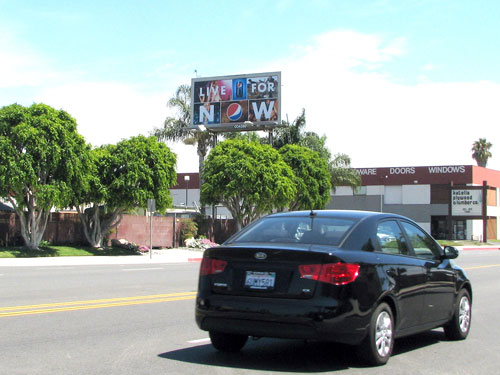
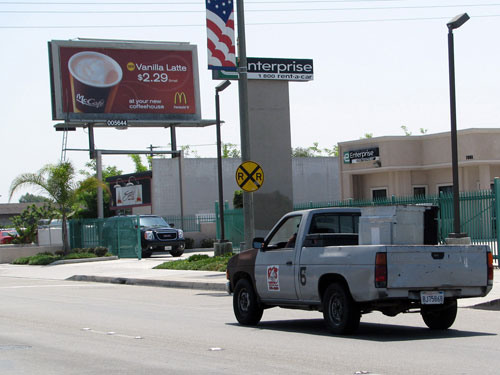
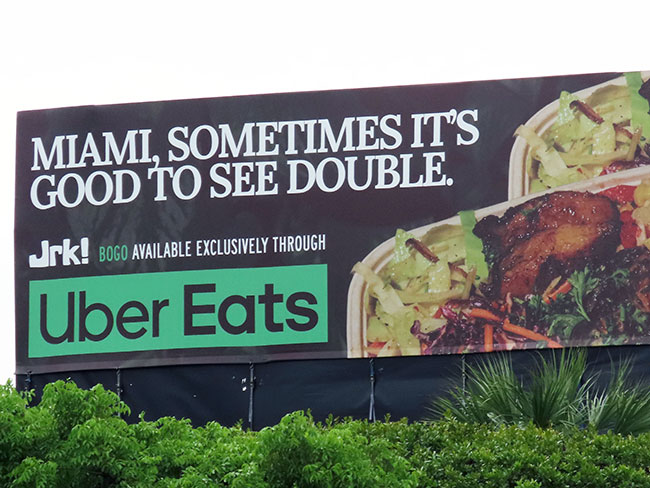
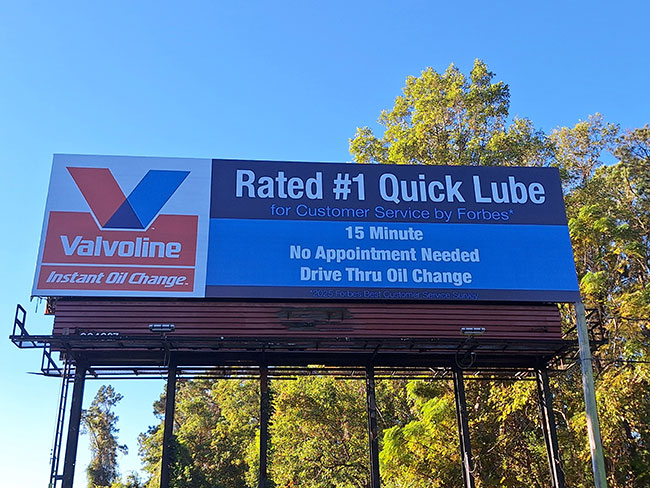
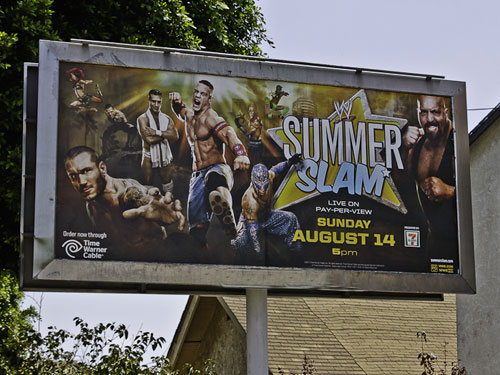
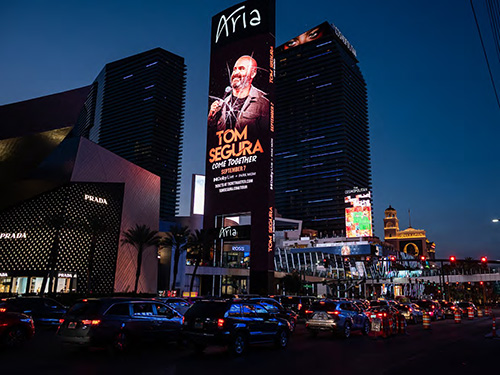
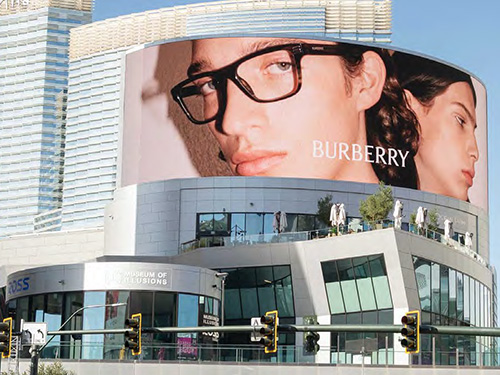
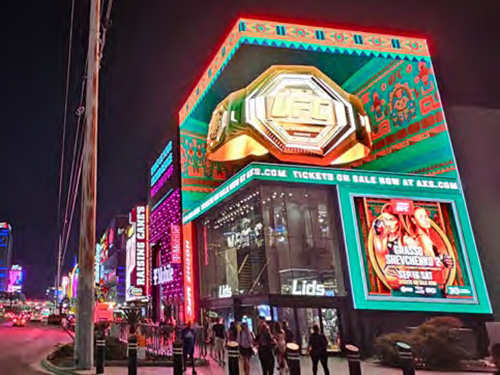
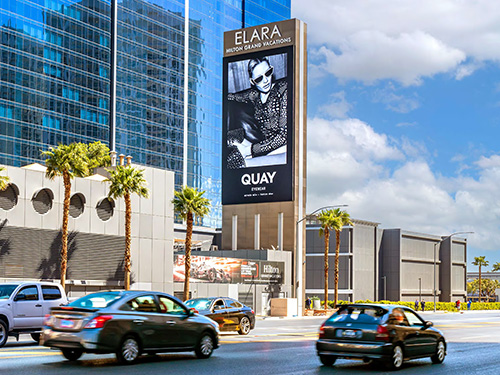
The San Francisco-Oakland-San Jose DMA is one of the nation’s most affluent and tech-centric billboard markets, with 2,511 billboard faces spanning San Francisco County, Alameda County, Santa Clara County, Contra Costa County, San Mateo County, and surrounding counties.
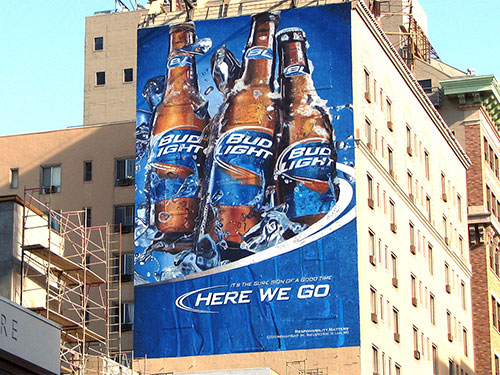
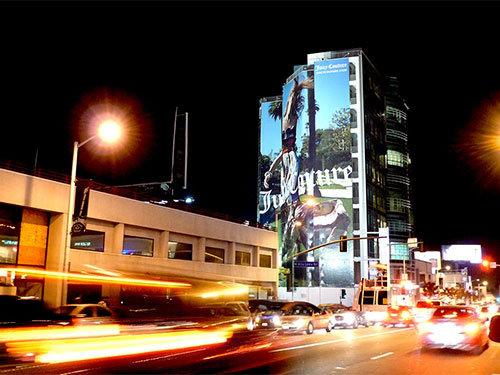
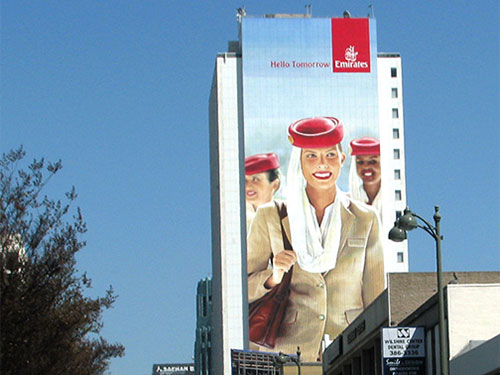
Billboard advertising in San Francisco starts at $2,000 per 4-week period. Static poster billboards in San Francisco average $2,725 per 4-week period ($2,000–$3,450). Static bulletin billboards average $13,250 ($5,500–$21,000), digital bulletin billboards average $13,250 ($7,500–$19,000), and Wallscape mural billboards average $87,500 ($25,000–$150,000) per 4-week period.
Billboard advertising in San Francisco has CPMs starting at $4 per 4-week period. Static poster billboard CPMs in San Francisco average $8 ($6–$10) per 4-week period. Static bulletin billboard CPMs average $10 ($4–$15), digital bulletin billboard CPMs average $9 ($5–$12), and Wallscape mural billboard CPMs average $97 ($28–$166).
Billboard density is highest along the Bayshore Freeway (US 101) (47 faces), International Blvd (37 faces), and the Bay Bridge corridor (I-80) (30 faces), with static bulletins, digital bulletins, static posters, digital posters, and Wallscape mural billboards available across the DMA. The DMA spans from San Francisco and Marin County in the north through the East Bay cities of Oakland, Berkeley, and Fremont, south to San Jose and Silicon Valley, covering one of the country’s most affluent and tech-forward audiences.
San Francisco-Oakland-San Jose, CA Billboard Market Snapshot
The San Francisco-Oakland-San Jose, CA billboard market tracked by Blue Line Media includes 2,511 billboard faces, comprising 139 digital (LED) and 2,372 static (printed/mesh) displays. Billboard coverage spans 10 counties: Alameda County, San Francisco County, Santa Clara County, Contra Costa County, San Mateo County, Mendocino County, Sonoma County, Solano County, Lake County and Napa County. The market delivers approximately 467,888,269 weekly impressions (age 18+), equivalent to approximately 1,871,553,076 impressions over a standard 4-week campaign period.
Inventory by Location Type — San Francisco-Oakland-San Jose, CA
Urban — 86%
Suburban — 7%
Rural — 6%
Board Count by County — San Francisco-Oakland-San Jose, CA
County
Billboard Faces
Alameda County
805
San Francisco County
615
Santa Clara County
448
Contra Costa County
162
San Mateo County
152
Mendocino County
106
Sonoma County
97
Solano County
66
Lake County
31
Napa County
24
Major Billboard Corridors — San Francisco-Oakland-San Jose, CA
Road / Corridor
Billboard Faces
Bayshore Freeway (US 101)
47
International Blvd
37
Bay Bridge (I-80)
30
Mission Blvd
29
San Pablo Ave
25
Sample Billboard Inventory — San Francisco-Oakland-San Jose, CA
Location / Road
Format
Direction
4-Week Imps (Age 18+)
Bay Bridge & Toll Plaza
Digital Bulletin
W
10,485,676
BAY BRIDGE
Digital Bulletin
W
10,052,728
I 80 W/O Bay Bridge Toll Plaza
Static Bulletin
W
6,550,548
Central Skyway E/O Mission N/S
Static Bulletin
E
6,258,360
Harrison & 3Rd St SW/S
Static Bulletin
NE
5,361,036
Skyway (I-80) & 7Th Street N/S
Static Bulletin
E
4,915,716
Bayshore Frwy
Static Bulletin
N
4,887,740
I-880
Digital Bulletin
NW
4,851,840
San Francisco, CA Billboard Advertising Market Data
No. of Billboards
2,511
Roads
Bayshore Freeway (US 101) (47 faces) — reaching Peninsula commuters, tech corridor workers, and travelers between San Francisco and San Jose along the Bay Area’s busiest north-south freeway. International Blvd (37 faces) — reaching East Bay residents, retail shoppers, and local commuters along one of Oakland’s highest-traffic urban corridors. Bay Bridge (I-80) (30 faces) — reaching cross-bay commuters and Bay Area travelers on the primary interstate link between San Francisco and Oakland, with hundreds of thousands of daily crossings. Mission Blvd (29 faces) — reaching East Bay communities from Fremont through Hayward and Union City, with strong reach to suburban retail and residential audiences across Alameda County. San Pablo Ave (25 faces) — reaching Berkeley, Oakland, and Richmond residents and commuters along a continuous urban corridor through the North East Bay. Additional coverage on the Nimitz Freeway (I-880) through Oakland, Hayward, and Fremont, MacArthur Blvd (I-580) through the East Bay hills, Telegraph Ave through Berkeley and Oakland, Monterey Blvd through San Jose, and Broadway through downtown Oakland.
Attractions and Neighborhoods
Golden Gate Bridge, Bay Area, Chinatown, North Beach, Nob Hill, Russian Hill, Financial District,
Union Square, Tenderloin, SoMa (South of Market), Mission District, Castro, Haight-Ashbury, Hayes
Valley, Japantown, Marina District, Pacific Heights, Presidio, Richmond District, Sunset District,
Twin Peaks, Noe Valley, Glen Park, Bernal Heights, Potrero Hill, Dogpatch, Excelsior, Visitacion
Valley, Bayview-Hunters Point, Outer Mission, West Portal, Forest Hill, St. Francis Wood, Ingleside,
Oceanview, Parkside, Lakeshore, Downtown Oakland, East Oakland, Berkeley, Silicon Valley, San Jose
How much does billboard advertising cost in San Francisco, CA?
Billboard advertising in San Francisco starts at $2,000 per 4-week period. Static poster billboards (medium format) average $2,725 per 4-week period ($2,000–$3,450). Static bulletin billboards (large format, 14'×48') average $13,250 per 4 weeks ($5,500–$21,000). Digital bulletin billboards (LED, large format) average $13,250 per 4 weeks ($7,500–$19,000). Wallscape mural billboards (large-format graphics on building and parking structure exteriors) average $87,500 per 4 weeks ($25,000–$150,000). A $5,000 minimum spend applies and may be spread across multiple boards and flight periods. Premium locations — including the Bay Bridge corridor, Wallscape locations in SoMa and the Mission District, and high-visibility sites along US 101 — may be priced above these ranges depending on availability.
What is the CPM for billboard advertising in San Francisco, CA?
Billboard advertising in San Francisco has CPMs starting at $4 per 4-week period. Static poster billboards (medium billboards) average $8 CPM ($6–$10) per 4-week period. Static bulletin billboards (large billboards, 14'×48') average $10 CPM ($4–$15). Digital bulletin billboards average $9 CPM ($5–$12). Wallscape mural billboards average $97 CPM ($28–$166), reflecting premium large-format placement across San Francisco’s most visible urban building faces. Digital poster billboards average $10 CPM ($6–$13). CPMs are calculated using the average 4-week impressions (age 18+) for each format across all 2,511 billboard faces in the San Francisco-Oakland-San Jose DMA.
How often will people see my billboard in San Francisco, CA?
A static bulletin in San Francisco delivers an average of 1,365,950 impressions (age 18+) over a 4-week campaign period. A digital bulletin delivers an average of 1,629,451 impressions over the same period. A Wallscape mural billboard delivers an average of 901,379 impressions per 4-week period. Commuters on major corridors like the Bayshore Freeway (US 101), International Blvd, and the Bay Bridge (I-80) typically pass the same billboard multiple times per week, making billboards one of the highest-frequency media formats available. Across all 2,511 billboard faces in the San Francisco-Oakland-San Jose DMA, the market delivers approximately 1,871,553,076 total impressions per 4-week period.
What are the best roads for billboard advertising in San Francisco, CA?
The highest-density billboard corridors in the San Francisco DMA are Bayshore Freeway (US 101) (47 faces), International Blvd (37 faces), Bay Bridge (I-80) (30 faces), Mission Blvd (29 faces), and San Pablo Ave (25 faces). The Bayshore Freeway (US 101) is the Bay Area’s primary north-south artery, ideal for reaching Peninsula commuters, tech industry workers heading to Silicon Valley campuses, and travelers connecting San Francisco to San Jose and the South Bay. International Blvd in Oakland is the premier East Bay urban corridor for reaching diverse residential and retail audiences across the flatlands of Alameda County. The Bay Bridge (I-80) corridor offers unparalleled cross-bay reach, with exposure to hundreds of thousands of commuters linking San Francisco and the East Bay daily. For suburban reach across Alameda County, Mission Blvd and San Pablo Ave provide continuous coverage from Fremont to Berkeley, capturing residential commuters, retail shoppers, and university audiences near UC Berkeley and Cal State East Bay. Additional high-density corridors include the Nimitz Freeway (I-880) for Hayward and Fremont coverage and MacArthur Blvd (I-580) for East Bay hills and inner East Bay targeting.
How many billboards are in San Francisco, CA?
The San Francisco-Oakland-San Jose DMA contains 2,511 billboard faces tracked by Blue Line Media across San Francisco County, Alameda County, Santa Clara County, Contra Costa County, and surrounding counties. Of these, 139 are digital (LED) and 2,372 are static (printed/mesh), spanning Wallscape mural, bulletin, and poster formats. Billboard coverage reaches 10 counties in the DMA, with the highest concentrations in Alameda County, San Francisco County, and Contra Costa County.
What types of billboards are available in San Francisco, CA?
San Francisco billboard inventory includes Wallscape mural billboards (large-format graphics on building and parking structure exteriors), static bulletins (large format, 14'×48'), digital bulletins (LED, large format), static posters (medium format), and digital posters. Of the 2,511 faces in the San Francisco-Oakland-San Jose DMA, 139 are digital (LED) and 2,372 are static (printed/mesh). 86% of inventory is in urban and urban business locations, 7% suburban, and 6% rural, offering flexible targeting across San Francisco-Oakland-San Jose audience densities.
When is the best time to advertise on billboards in San Francisco, CA?
Billboard demand in San Francisco peaks during two windows: September through November (tech conference season — Salesforce Dreamforce, Oracle CloudWorld, and the fall product cycle generate heavy B2B and consumer advertising) and February through April (post-holiday bounce with strong retail and consumer spending). The holiday retail window (October through December) is also strong for consumer brands. Summer (June through August) can be slightly softer on the Peninsula due to coastal fog, but East Bay and Silicon Valley corridors remain active year-round. Key local events driving demand include Salesforce Dreamforce (September), Outside Lands Music Festival (August, Golden Gate Park), and Fleet Week (October, San Francisco Bay). For popular corridor locations along US 101 and the Bay Bridge approach, plan 6–8 weeks in advance; Wallscape locations in SoMa and the Mission District may require 8–12 weeks due to limited availability.
How does billboard advertising work in San Francisco, CA?
Getting started with billboard advertising in San Francisco is straightforward:
Get a quote — Tell Blue Line Media your target area, budget, and campaign dates.
Choose your billboard — Blue Line Media recommends available billboard locations matching your audience and flight.
Provide creative or use our free design service.
Go live — Boards are posted and your campaign runs for your contracted flight period.
What size are billboards in San Francisco, CA?
Billboard sizes in San Francisco follow industry-standard dimensions. Static bulletin billboards (large format) measure 14 feet high by 48 feet wide (14'×48'). Static poster billboards (medium format) measure 10.5 feet high by 22.75 feet wide (10.5'×22.75'). Digital bulletin billboards and digital poster billboards share the same dimensions as their static counterparts. Wallscape mural billboards are printed or mesh graphics mounted to building and parking structure exteriors; sizes vary by building face, ranging from a few hundred to several thousand square feet.
How far in advance do I need to book billboard advertising in San Francisco, CA?
As soon as possible, because advertising is sold on a first come, first served basis. Availability changes daily as campaigns book and end.
Creative Due Dates:
Static (Print): 2–3 weeks prior to ad start date. May be reduced in certain cases.
Digital: 3 business days prior to ad start date.
Can I target specific neighborhoods or areas with billboard advertising in San Francisco, CA?
Yes — the San Francisco-Oakland-San Jose DMA offers distinct sub-markets for targeted billboard campaigns. Downtown San Francisco and SoMa (South of Market) reach tech professionals, financial industry workers, and business travelers at the heart of the Bay Area economy. The East Bay (Oakland and Berkeley) offers strong reach to urban and university audiences, with diverse demographics along International Blvd, Telegraph Ave, and San Pablo Ave. Silicon Valley (San Jose, Santa Clara, Palo Alto, Sunnyvale, and Mountain View) reaches tech industry workers and professionals along the US 101 and I-280 corridors, making it one of the most valuable B2B advertising sub-markets in the country. The Peninsula (San Mateo, Redwood City, Daly City) connects northern and southern Bay Area audiences, reaching a mix of commuters and suburban residents. Marin County offers premium reach to affluent northerly audiences via the US 101 Marin corridor.
What are the most popular billboard locations in San Francisco, CA?
Among the most-viewed billboard corridors in the San Francisco DMA are the Bayshore Freeway (US 101), the Bay Area’s primary north-south freeway connecting San Francisco to San Jose (47 faces), International Blvd, Oakland’s highest-traffic urban surface corridor (37 faces), the Bay Bridge corridor (I-80), the primary link between San Francisco and Oakland (30 faces), Mission Blvd, serving the East Bay from Fremont through Hayward (29 faces), and San Pablo Ave, a continuous urban corridor through Berkeley, Oakland, and Richmond (25 faces). Blue Line Media can recommend specific billboard positions — including Wallscape mural locations — on these and other corridors based on current availability.
One call to Blue Line Media provides us with any advertising option in any city across the country.
Matt FreemanPETA
Blue Line Media has executed multiple government PSA campaigns in multiple U.S. cities, thereby giving our clients a truly national reach.
Sarah ParadaPorter Novelli
Working with Blue Line Media is a delight.
Judith DeCampACS Quantum
Blue Line Media is extremely helpful in delivering advertising media in any city we want across the country.
Sheldon de SouzaBetter World Advertising
Copyright 2026 Blue Line Media Inc
Not all images represent ads placed by Blue Line Media. Images may be subject to copyright. Names and trade and service marks are property of their owners and are not intended to endorse Blue Line Media.
In accordance with its Accessibility Statement, Blue Line Media is committed to ensuring accessibility of its website. To report an accessibility issue, request accessibility assistance regarding website content, or to request a specific electronic format, please contact the accessibility coordinator at 800-807-0360 or complete the form. Reasonable efforts will be made to accommodate all needs.
By using this website, you consent to the placement and storing of cookies on your computer by this website. These cookies are used to collect information about how you interact with our website and allow us to remember you. We use this information in order to improve and customize your browsing experience and for analytics and metrics about our visitors both on this website and other media. To find out more about the cookies we use, see our Privacy Policy.