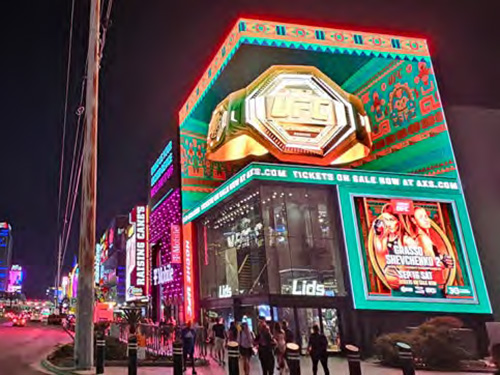
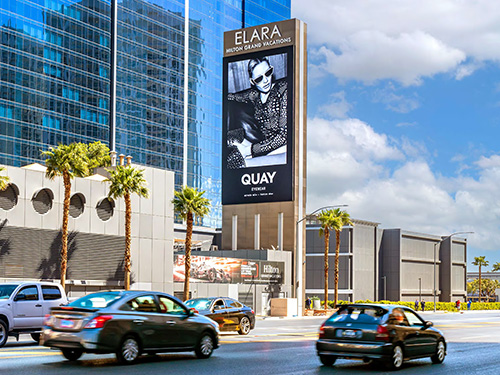
The Phoenix DMA is one of the Southwest’s largest and fastest-growing billboard markets, with 3,101 billboard faces spanning Maricopa County, Pinal County, and surrounding counties across the greater Phoenix metro.
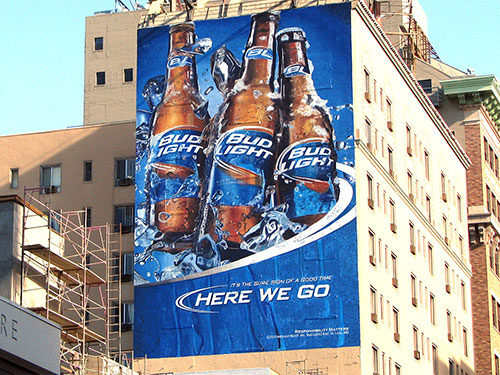
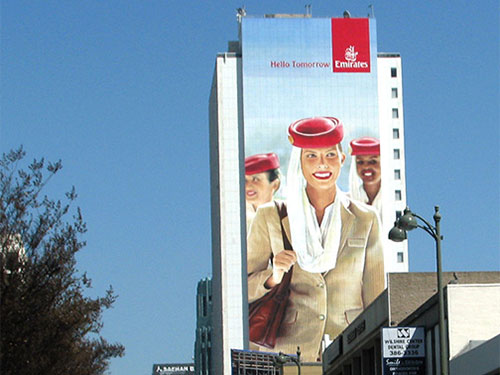
Billboard advertising in Phoenix starts at $1,250 per 4-week period. Static poster billboards in Phoenix average $1,625 per 4-week period ($1,250–$2,000). Static bulletin billboards average $4,950 ($2,400–$7,500), digital bulletin billboards average $5,000 ($2,500–$7,500), and Wallscape mural billboards average $31,000 ($12,000–$50,000) per 4-week period.
Billboard advertising in Phoenix has CPMs starting at $2 per 4-week period. Static poster billboard CPMs in Phoenix average $4 ($3–$5) per 4-week period. Static bulletin billboard CPMs average $6 ($3–$9), digital bulletin billboard CPMs average $5 ($2–$7), and Wallscape mural billboard CPMs average $39 ($15–$63).
Billboard density is highest along I-10 (135 faces), I-17 (112 faces), and Loop 202 (22 faces), with Wallscape mural billboards, static bulletins, digital bulletins, static posters, and digital posters available across the DMA. The DMA spans the greater Phoenix metro including Scottsdale, Mesa, Chandler, Tempe, Glendale, Peoria, Gilbert, Surprise, Avondale, and Goodyear in Maricopa County, along with communities in Pinal County.
Phoenix, AZ Billboard Market Snapshot
The Phoenix, AZ billboard market tracked by Blue Line Media includes 3,101 billboard faces, comprising 481 digital (LED) and 2,620 static (printed/mesh) displays. Billboard coverage spans 7 counties: Maricopa County, Mohave County, Pinal County, Yavapai County, Coconino County, Gila County and Navajo County. The market delivers approximately 554,323,920 weekly impressions (age 18+), equivalent to approximately 2,217,295,680 impressions over a standard 4-week campaign period.
Inventory by Location Type — Phoenix, AZ
Urban — 71%
Suburban — 16%
Rural — 13%
Board Count by County — Phoenix, AZ
County
Billboard Faces
Maricopa County
2,721
Mohave County
219
Pinal County
72
Yavapai County
33
Coconino County
19
Gila County
18
Navajo County
7
Major Billboard Corridors — Phoenix, AZ
Road / Corridor
Billboard Faces
I-10 (Maricopa Freeway / Papago Freeway)
135
I-17 (Black Canyon Freeway / Veterans Highway)
112
Loop 202 (Red Mountain / Santan Freeway)
22
Jefferson Street (E Jefferson St)
36
Indian School Road
30
Sample Billboard Inventory — Phoenix, AZ
Location / Road
Format
Direction
4-Week Imps (Age 18+)
I-10
Digital Bulletin
N
6,934,808
7TH STREET
Digital Bulletin
NE
6,472,284
I-17 N/O Camelback Rd E/S
Static Bulletin
S
5,821,804
101 FWY S/O 202 FWY ES
Digital Bulletin
S
5,336,168
CAMELBACK
Digital Bulletin
E
5,276,884
CAMELBACK ROAD
Digital Bulletin
W
4,622,124
I-17
Static Bulletin
N
4,281,768
I-17 180 ft S/O Dunlap W/S
Static Bulletin
N
4,170,780
Phoenix, AZ Billboard Advertising Market Data
No. of Billboards
3,101
Roads
I-10 (Maricopa Freeway / Papago Freeway) (135 faces) — reaching the DMA’s highest concentration of billboard faces along the primary east-west freeway spine connecting downtown Phoenix through Tempe, Chandler, and the East Valley to Casa Grande, and west through Glendale, Goodyear, and Buckeye toward the California border, capturing the broadest cross-section of metro Phoenix commuters, logistics workers, and regional travelers on the region’s busiest corridor. I-17 (Black Canyon Freeway / Veterans Highway) (112 faces) — reaching north-south commuters, North Phoenix and Scottsdale-corridor residents, and travelers between downtown Phoenix and Flagstaff along the second-highest-density billboard corridor in the DMA, running from the South Mountain interchange through central Phoenix, North Phoenix, Anthem, and the high desert toward Flagstaff. Loop 202 (Red Mountain / Santan Freeway) (22 faces) — reaching East Valley commuters, retail shoppers, and suburban residents across Mesa, Gilbert, Chandler, and the South Mountain corridor, connecting the 202 Red Mountain (northeast arc) with the 202 Santan (southeast arc) for broad suburban Phoenix coverage from Tempe through Queen Creek. Jefferson Street (E Jefferson St) (36 faces) — reaching downtown Phoenix business-district workers, ASU Tempe corridor traffic, and urban commuters along one of central Phoenix’s highest-density surface billboard corridors, running east from downtown through the Warehouse District, South Phoenix, and the I-10/I-17 interchange cluster. Indian School Road (30 faces) — reaching mid-Phoenix residential commuters, Scottsdale-bound traffic, and Camelback corridor retail audiences along the east-west surface arterial connecting Maryvale and central Phoenix through Camelback East, Arcadia, and Paradise Valley to Scottsdale. Additional coverage on Loop 101 (Pima / Price / Agua Fria Freeway) circling the metro through Scottsdale, Tempe, and Glendale, US-60 (Superstition Freeway / Grand Avenue) serving the West Valley through Avondale and Surprise, McDowell Road through midtown Phoenix and Scottsdale, Camelback Road through the Biltmore corridor and Paradise Valley, Thomas Road through central Phoenix and the east side, and Bell Road through the North Phoenix suburban corridor.
Attractions and Neighborhoods
South Mountain Park, Camelback Mountain, Desert Botanical Garden, Chase Field, Footprint Center,
State Farm Stadium; Ahwatukee, Alhambra, Arcadia, Biltmore Area, Camelback East, Central City,
Deer Valley, Desert Ridge, Encanto, Laveen, Maryvale, Midtown, Moon Valley, North Gateway,
North Mountain, Paradise Valley, Roosevelt Row, Sunnyslope, Uptown, West Phoenix;
Scottsdale, Tempe, Mesa, Chandler, Gilbert, Glendale, Peoria, Surprise, Avondale,
Goodyear, Buckeye, Queen Creek, Fountain Hills, Cave Creek, Tolleson
How much does billboard advertising cost in Phoenix, AZ?
Billboard advertising in Phoenix starts at $1,250 per 4-week period. Static poster billboards (medium format) average $1,625 per 4-week period ($1,250–$2,000). Static bulletin billboards (large format, 14'×48') average $4,950 per 4 weeks ($2,400–$7,500). Digital bulletin billboards (LED, large format) average $5,000 per 4 weeks ($2,500–$7,500). Wallscape mural billboards (large-format graphics on building and parking structure exteriors) average $31,000 per 4 weeks ($12,000–$50,000). A $5,000 minimum spend applies and may be spread across multiple boards and flight periods. Premium locations — including high-visibility I-10 and I-17 interchange positions, Wallscape locations in downtown Phoenix and the Biltmore corridor, and major surface street positions on Camelback Road and Indian School Road — may be priced above these ranges depending on availability.
What is the CPM for billboard advertising in Phoenix, AZ?
Billboard advertising in Phoenix has CPMs starting at $2 per 4-week period. Static poster billboards (medium billboards) average $4 CPM ($3–$5) per 4-week period. Static bulletin billboards (large billboards, 14'×48') average $6 CPM ($3–$9). Digital bulletin billboards average $5 CPM ($2–$7). Wallscape mural billboards average $39 CPM ($15–$63), reflecting prime large-format placement on high-visibility building faces in Phoenix’s urban core, downtown corridor, and Biltmore area. Digital poster billboards average $4 CPM ($2–$5). CPMs are calculated using the average 4-week impressions (age 18+) for each format across all 3,101 billboard faces in the Phoenix DMA.
How often will people see my billboard in Phoenix, AZ?
A static bulletin in Phoenix delivers an average of 790,767 impressions (age 18+) over a 4-week campaign period. A digital bulletin delivers an average of 1,068,430 impressions over the same period. A Wallscape mural billboard delivers an average of 787,765 impressions per 4-week period. Phoenix is one of the most car-dependent major metros in the United States — residents rely almost exclusively on driving, making billboard exposure extremely high-frequency across the metro. Commuters on major corridors like I-10, I-17, and Loop 202 typically pass the same billboard multiple times per week, making billboards one of the highest-frequency media formats available. Across all 3,101 billboard faces in the Phoenix DMA, the market delivers approximately 2,217,295,680 total impressions per 4-week period.
What are the best roads for billboard advertising in Phoenix, AZ?
The highest-density billboard corridors in the Phoenix DMA are I-10 (Maricopa Freeway / Papago Freeway) (135 faces), I-17 (Black Canyon Freeway / Veterans Highway) (112 faces), Loop 202 (Red Mountain / Santan Freeway) (22 faces), Jefferson Street (E Jefferson St) (36 faces), and Indian School Road (30 faces). I-10 is metro Phoenix’s primary east-west freeway and the single highest-face-count billboard corridor in the DMA, making it essential for campaigns targeting both the urban core and the rapidly growing West Valley suburbs from Avondale and Goodyear to the California border, or the East Valley communities of Tempe, Chandler, and Casa Grande. I-17 is the go-to corridor for campaigns targeting north-south metro-wide reach — from downtown Phoenix through North Phoenix, Anthem, and the I-17/Loop 101 interchange cluster — with the added advantage of heavy truck and logistics traffic from the I-10 interchange north, complementing consumer-facing messaging. Loop 202 serves the East Valley’s fastest-growing suburban population and is the best corridor for targeting Mesa, Chandler, Gilbert, and the South Mountain and Tempe communities, with strong retail, technology-sector, and household-spending audiences. Jefferson Street captures the dense downtown Phoenix employment corridor and the ASU-adjacent Tempe traffic cluster, ideal for financial services, healthcare, real estate, and recruitment campaigns targeting professional audiences commuting into the central business district. Indian School Road is Phoenix’s most productive mid-city east-west surface arterial for reaching the DMA’s broad middle-income residential audience across central Phoenix, Camelback East, Arcadia, and the Paradise Valley – Scottsdale approach.
How many billboards are in Phoenix, AZ?
The Phoenix DMA contains 3,101 billboard faces tracked by Blue Line Media across Maricopa County, Pinal County, and surrounding counties. Of these, 481 are digital (LED) and 2,620 are static (printed/mesh), spanning Wallscape mural, bulletin, and poster formats. Billboard coverage reaches 7 counties in the DMA, with the highest concentrations in Maricopa County, which contains the city of Phoenix, Scottsdale, Mesa, Chandler, Glendale, Tempe, and most of the DMA’s urban inventory.
What types of billboards are available in Phoenix, AZ?
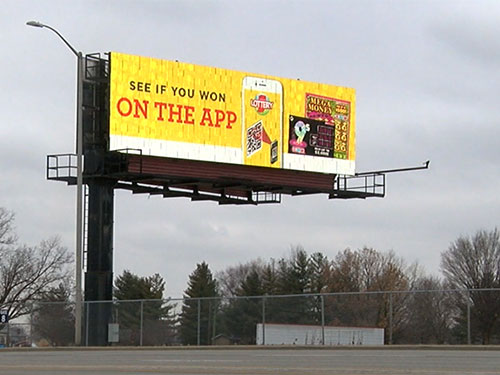
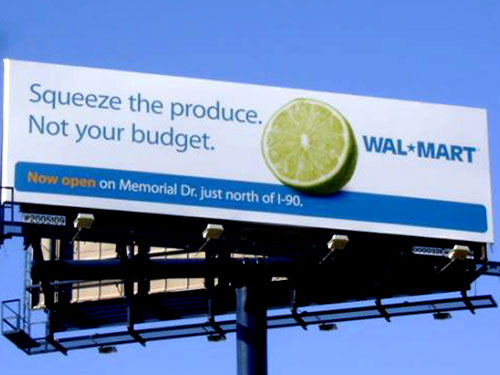
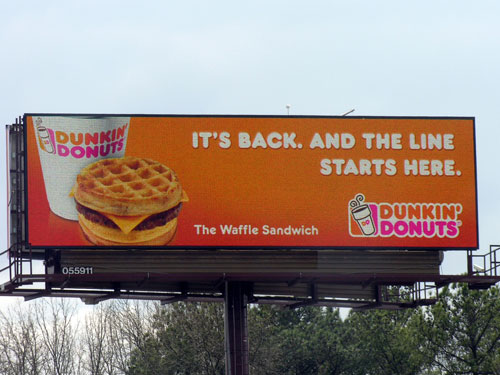
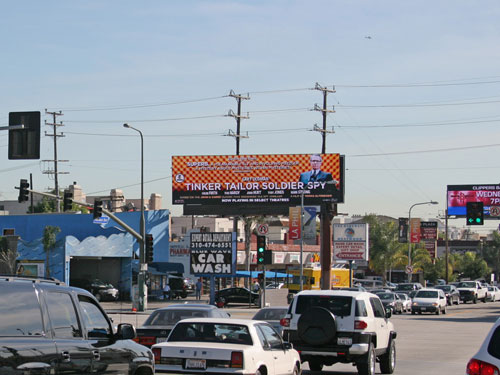
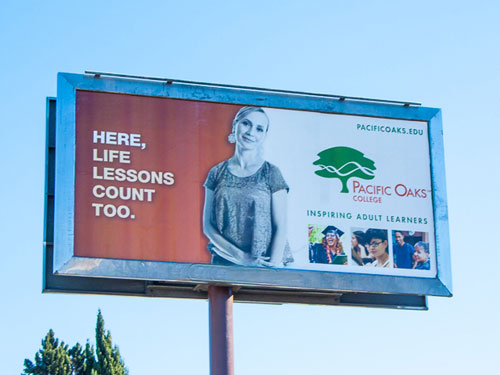
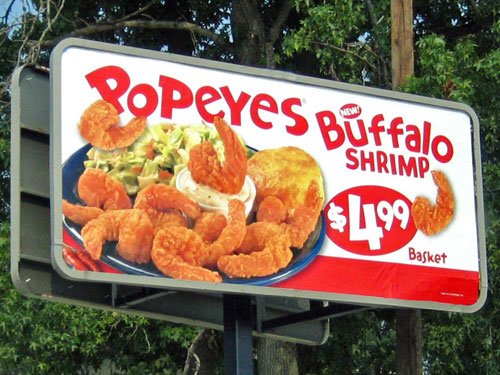
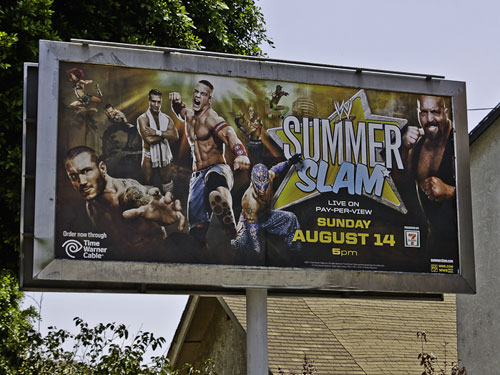
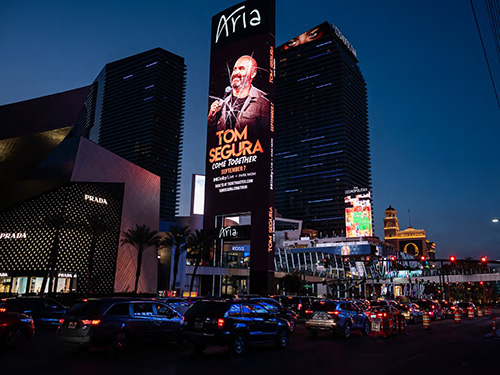
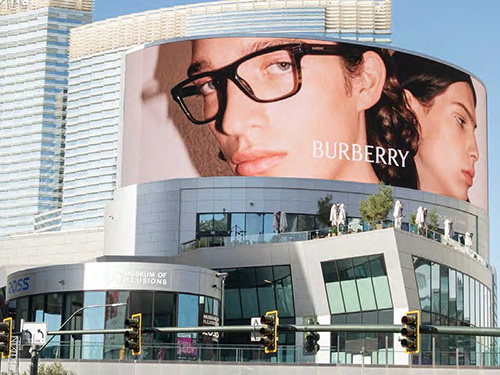
Phoenix billboard inventory includes Wallscape mural billboards (large-format graphics on building and parking structure exteriors), static bulletins (large format, 14'×48'), digital bulletins (LED, large format), static posters (medium format), and digital posters. Of the 3,101 faces in the Phoenix DMA, 481 are digital (LED) and 2,620 are static (printed/mesh). 71% of inventory is in urban and urban business locations, 16% suburban, and 13% rural, offering flexible targeting across Phoenix audience densities.
When is the best time to advertise on billboards in Phoenix, AZ?
Billboard demand in Phoenix is strong year-round, reflecting the DMA’s permanent population growth and consistent outdoor driving culture, with two distinct seasonal peaks. October through April is the primary peak season — coinciding with the arrival of snowbirds and winter visitors who significantly expand the Phoenix metro population, the PGA Tour’s WM Phoenix Open (February, one of the most-attended sporting events in the world), Cactus League Spring Training (February through March, 15 MLB teams across the Valley), and the Phoenix Suns and Arizona Coyotes playoff windows. The spring shoulder season (March through May) is particularly strong for new-construction real estate, home services, and retail advertisers targeting the wave of relocating households. May through September is the summer window — Phoenix’s extreme heat keeps outdoor activity concentrated to morning and evening commute windows and air-conditioned commercial centers, but vehicle traffic remains high and billboard CPMs are generally at their most negotiable, making summer a strong opportunity for budget-conscious advertisers. For downtown Phoenix and Wallscape locations, plan 4–6 weeks in advance; high-visibility I-10 and I-17 interchange positions and WM Phoenix Open – adjacent boards may require 8–12 weeks of lead time.
How does billboard advertising work in Phoenix, AZ?
Getting started with billboard advertising in Phoenix is straightforward:
Get a quote — Tell Blue Line Media your target area, budget, and campaign dates.
Choose your billboard — Blue Line Media recommends available billboard locations matching your audience and flight.
Provide creative or use our free design service.
Go live — Boards are posted and your campaign runs for your contracted flight period.
What size are billboards in Phoenix, AZ?
Billboard sizes in Phoenix follow industry-standard dimensions. Static bulletin billboards (large format) measure 14 feet high by 48 feet wide (14'×48'). Static poster billboards (medium format) measure 10.5 feet high by 22.75 feet wide (10.5'×22.75'). Digital bulletin billboards and digital poster billboards share the same dimensions as their static counterparts. Wallscape mural billboards are printed or mesh graphics mounted to building and parking structure exteriors; sizes vary by building face, ranging from a few hundred to several thousand square feet.
How far in advance do I need to book billboard advertising in Phoenix, AZ?
As soon as possible, because advertising is sold on a first come, first served basis. Availability changes daily as campaigns book and end.
Creative Due Dates:
Static (Print): 2–3 weeks prior to ad start date. May be reduced in certain cases.
Digital: 3 business days prior to ad start date.
Can I target specific neighborhoods or areas with billboard advertising in Phoenix, AZ?
Yes — the Phoenix DMA offers distinct sub-markets for targeted billboard campaigns. Downtown Phoenix and the Midtown corridor target the DMA’s professional class, healthcare and education workers, and convention visitors at the Phoenix Convention Center, with Wallscape mural opportunities on building faces visible from I-10 and I-17. The Scottsdale and Camelback corridor reaches the DMA’s highest-income households, luxury retail audience, and hospitality industry workforce along Camelback Road, Indian School Road, and the Loop 101 Pima Freeway. The East Valley — Mesa, Chandler, Gilbert, and Tempe along I-10, Loop 202, and US-60 — offers access to the DMA’s largest technology-sector and semiconductor-industry employer cluster, including Intel, TSMC, and Microchip Technology campuses, reaching a large STEM-professional and higher-income suburban household audience. The West Valley — Glendale, Peoria, Surprise, Avondale, Goodyear, and Buckeye along I-10 West, Loop 101, and US-60 — is the DMA’s fastest-growing residential and retail corridor, reaching younger family households, first-time homebuyers, and the professional sports audience at State Farm Stadium (Arizona Cardinals) and Camelback Ranch. The South Phoenix and airport corridor along I-10, I-17, and Jefferson Street captures the DMA’s logistics, manufacturing, and aviation-sector workforce audience at Phoenix Sky Harbor International Airport.
What are the most popular billboard locations in Phoenix, AZ?
Among the most-viewed billboard corridors in the Phoenix DMA are I-10 (Maricopa/Papago Freeway), the primary east-west freeway and highest-face-count corridor in the DMA spanning the full metro from the California border to the East Valley (135 faces), I-17 (Black Canyon Freeway), the primary north-south freeway connecting downtown Phoenix through North Phoenix to Anthem and Flagstaff (112 faces), Loop 202 (Red Mountain/Santan Freeway), the East Valley’s primary orbital freeway through Mesa, Chandler, and Gilbert (22 faces), Jefferson Street, downtown Phoenix’s central surface billboard corridor adjacent to Chase Field and Footprint Center (36 faces), and Indian School Road, the mid-Phoenix east-west arterial connecting central Phoenix to Scottsdale through Camelback East and Arcadia (30 faces). Blue Line Media can recommend specific billboard positions — including Wallscape mural locations — on these and other corridors based on current availability.
One call to Blue Line Media provides us with any advertising option in any city across the country.
Matt FreemanPETA
Blue Line Media has executed multiple government PSA campaigns in multiple U.S. cities, thereby giving our clients a truly national reach.
Sarah ParadaPorter Novelli
Working with Blue Line Media is a delight.
Judith DeCampACS Quantum
Blue Line Media is extremely helpful in delivering advertising media in any city we want across the country.
Sheldon de SouzaBetter World Advertising
Copyright 2026 Blue Line Media Inc
Not all images represent ads placed by Blue Line Media. Images may be subject to copyright. Names and trade and service marks are property of their owners and are not intended to endorse Blue Line Media.
In accordance with its Accessibility Statement, Blue Line Media is committed to ensuring accessibility of its website. To report an accessibility issue, request accessibility assistance regarding website content, or to request a specific electronic format, please contact the accessibility coordinator at 800-807-0360 or complete the form. Reasonable efforts will be made to accommodate all needs.
By using this website, you consent to the placement and storing of cookies on your computer by this website. These cookies are used to collect information about how you interact with our website and allow us to remember you. We use this information in order to improve and customize your browsing experience and for analytics and metrics about our visitors both on this website and other media. To find out more about the cookies we use, see our Privacy Policy.