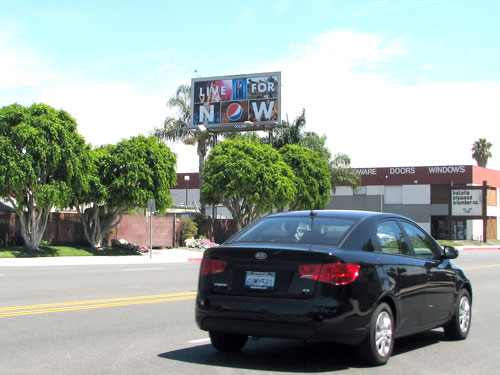
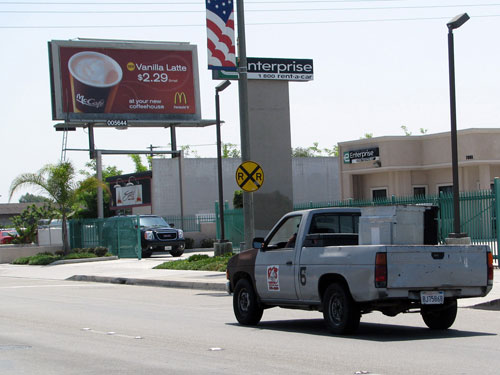
The Indianapolis DMA spans central Indiana, with 4,593 billboard faces tracked by Blue Line Media across Marion, Hamilton, Hendricks, Johnson, Hancock, Boone, Morgan, and Madison counties.
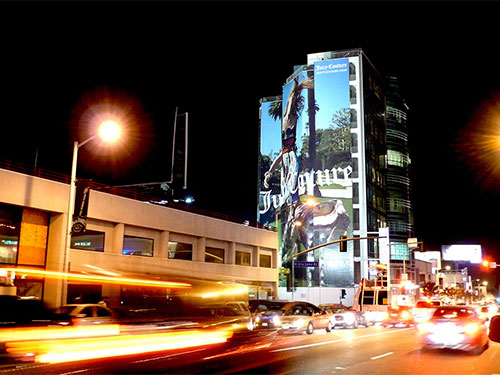
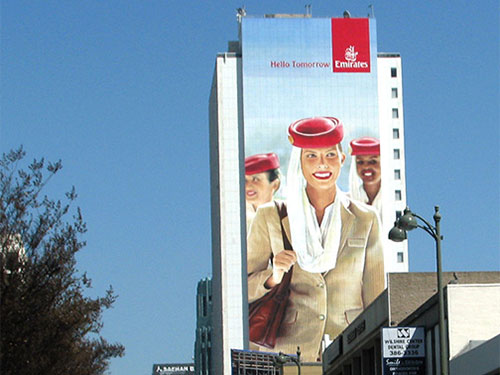
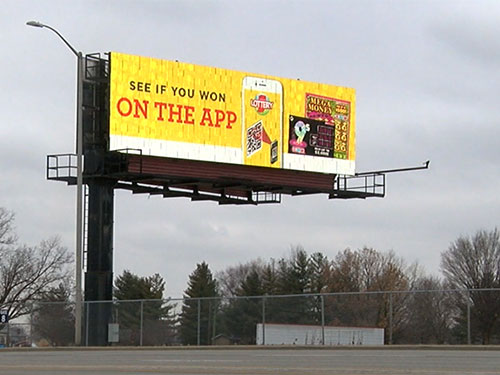
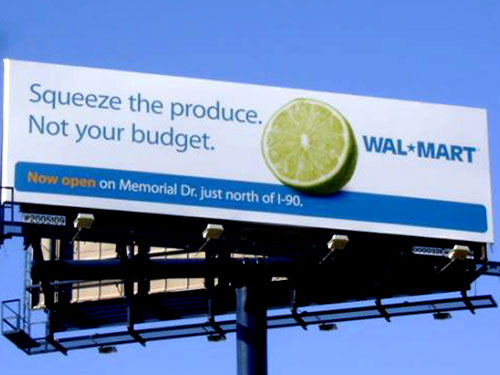
Billboard advertising in Indianapolis starts at $1,000 per 4-week period. Static poster billboards in Indianapolis average $1,500 per 4-week period ($1,000–$2,000). Static bulletin billboards average $4,000 ($2,500–$5,500), digital bulletin billboards average $4,000 ($2,500–$5,500), and Wallscape mural billboards average $15,000 ($10,000–$20,000) per 4-week period.
Billboard advertising in Indianapolis has CPMs starting at $4 per 4-week period. Static poster billboard CPMs in Indianapolis average $8 ($5–$10) per 4-week period. Static bulletin billboard CPMs average $7 ($4–$10), digital bulletin billboard CPMs average $8 ($5–$11), and Wallscape mural billboard CPMs average $32 ($21–$42).
Billboard density is highest along I-74 (17 faces), US 31 (Meridian Street) (6 faces), and SR 37 (8 faces). The Indianapolis DMA encompasses the greater Indianapolis metro, extending from Marion County through the fast-growing suburban communities of Hamilton County to the north, Hendricks and Morgan counties to the west and southwest, Johnson County to the south, and Hancock and Madison counties to the east.
Indianapolis, IN Billboard Market Snapshot
The Indianapolis, IN billboard market tracked by Blue Line Media includes 4,593 billboard faces, comprising 77 digital (LED) and 4,516 static (printed/mesh) displays. Billboard coverage spans 5+ counties, with the heaviest concentration in Marion County, Madison County, Delaware County, Howard County and Monroe County. The market delivers approximately 422,272,491 weekly impressions (age 18+), equivalent to approximately 1,689,089,964 impressions over a standard 4-week campaign period.
Inventory by Location Type — Indianapolis, IN
Urban — 64%
Suburban — 0%
Rural — 36%
Board Count by County — Indianapolis, IN
County
Billboard Faces
Marion County
1,692
Madison County
318
Delaware County
298
Howard County
221
Monroe County
184
Top Roads by Billboard Density — Indianapolis, IN
Road / Corridor
Billboard Faces
I-74
17
US 31 (Meridian St)
6
SR 37
8
I-69
6
Scatterfield Road
6
Sample Billboard Inventory — Indianapolis, IN
Location / Road
Format
Direction
4-Week Imps (Age 18+)
N/S 82ND STREET @ ALLISONVILLE RD - TRI
Static Bulletin
E
19,461,548
S/S 82ND ST, 50' E/O ALLISONVILLE RD
Static Bulletin
NW
7,598,356
4103 82nd St E 100 ft E/O Dean Rd SS
Static Bulletin
E
6,937,960
E/S US 31 50 FT. S/O THOMPSON ROAD - TRI
Static Bulletin
N
5,675,216
E/S US 31 500 FT. S/O I-465 - TRI
Static Bulletin
N
5,642,068
96th St E 500 ft E/O I-69 SS
Static Bulletin
W
5,363,976
E/S US31 SO, 1M N/O STOP 11 RD
Static Bulletin
NW
5,185,568
8620 MICHIGAN E/S 500' N/O 86TH ST - TRI
Static Bulletin
S
4,533,600
Indianapolis, IN Billboard Advertising Market Data
No. of Billboards
4,593
Roads
I-74 (17 faces) — the primary east-west interstate corridor through the Indianapolis metro, passing through Clermont and the western suburbs before continuing toward Crawfordsville to the west and Cincinnati to the east, carrying strong commuter and freight traffic with high billboard density on both sides of the I-465 interchange. US 31 (Meridian St) (6 faces) — the main north-south surface artery of the Indianapolis DMA, running from downtown Indianapolis north through Carmel and Westfield into Hamilton County, reaching affluent suburban households, corporate office parks, and retail corridors along one of the market’s most consistently high-traffic surface routes. SR 37 (8 faces) — the key southern corridor connecting Indianapolis to Martinsville and Morgan County, reaching suburban residential commuters, light-industrial audiences, and travelers accessing the I-69 corridor south of the city. I-69 (6 faces) — the northeast interstate corridor linking Indianapolis to Anderson and Muncie through Madison County, carrying a mix of urban commuters, university audiences, and regional freight traffic with consistent billboard density through the I-465 interchange and along the Anderson metro approach. Scatterfield Road (6 faces) — the primary commercial surface artery of the Anderson metro in Madison County, reaching working-class residential communities, retail shoppers, and local business audiences on one of the highest-density billboard corridors in the eastern Indianapolis DMA. Additional coverage on I-465 (the Indianapolis beltway) through all quadrants of the metro, I-70 through the east and west sides, Kentucky Avenue (IN-67) through the southwest side and Hendricks County, US-36 through Avon and Plainfield, and Washington Street (US-40) across the east and west sides of Marion County.
Attractions and Neighborhoods
Lucas Oil Stadium, Bankers Life Fieldhouse, Victory Field, Indianapolis Motor Speedway,
Broad Ripple, Butler-Tarkington, Castleton, Chatham Arch, Crown Hill, Fall Creek Place,
Fletcher Place, Fountain Square, Garfield Park, Herron-Morton Place, Irvington,
Lockerbie Square, Mapleton-Fall Creek, Meridian-Kessler, Near Eastside, Old Northside,
SoBro (South Broad Ripple), Stadium Village, University Heights, Woodruff Place,
Beech Grove, Carmel, Fishers, Greenwood, Lawrence, Speedway, Westfield, Zionsville
How much does billboard advertising cost in Indianapolis, IN?
Billboard advertising in Indianapolis starts at $1,000 per 4-week period. Static poster billboards (medium format) average $1,500 per 4-week period ($1,000–$2,000). Static bulletin billboards (large format, 14'×48') average $4,000 per 4 weeks ($2,500–$5,500). Digital bulletin billboards (LED, large format) average $4,000 per 4 weeks ($2,500–$5,500). Wallscape mural billboards (large-format graphics on building and parking structure exteriors) average $15,000 per 4 weeks ($10,000–$20,000). A $5,000 minimum spend applies and may be spread across multiple boards and flight periods. Premium locations — including high-visibility I-74/I-465 interchange positions, Meridian Street (US 31) through Carmel, and high-demand downtown Indianapolis corridors — may be priced above these ranges depending on availability.
What is the CPM for billboard advertising in Indianapolis, IN?
Billboard advertising in Indianapolis has CPMs starting at $4 per 4-week period. Static poster billboards (medium billboards) average $8 CPM ($5–$10) per 4-week period. Static bulletin billboards (large billboards, 14'×48') average $7 CPM ($4–$10). Digital bulletin billboards average $8 CPM ($5–$11). Wallscape mural billboards average $32 CPM ($21–$42), reflecting prime large-format placement on building exteriors in high-traffic Indianapolis locations. CPMs are calculated using the average 4-week impressions (age 18+) for each format across all 4,593 billboard faces in the Indianapolis DMA.
How often will people see my billboard in Indianapolis, IN?
A static bulletin in Indianapolis delivers an average of 575,524 impressions (age 18+) over a 4-week campaign period. A digital bulletin delivers an average of 514,223 impressions over the same period. A Wallscape mural billboard delivers an average of 475,352 impressions per 4-week period. Commuters on major corridors like I-74, US 31 (Meridian Street), and SR 37 typically pass the same billboard multiple times per week, making billboards one of the highest-frequency media formats available. Across all 4,593 billboard faces in the Indianapolis DMA, the market delivers approximately 1,689,089,964 total impressions per 4-week period.
What are the best roads for billboard advertising in Indianapolis, IN?
The highest-density billboard corridors in the Indianapolis DMA are I-74 (17 faces), US 31 (Meridian St) (6 faces), SR 37 (8 faces), I-69 (6 faces), and Scatterfield Road (6 faces). I-74 is the top choice for campaigns requiring maximum reach across the western metro, offering strong commuter and freight audience density between the I-465 interchange and the Clermont corridor. US 31 (Meridian Street) is the premier surface artery for reaching affluent Hamilton County audiences and corporate decision-makers commuting between downtown Indianapolis, Carmel, and Westfield. SR 37 connects Indianapolis to the Morgan County communities of Martinsville and is ideal for reaching south-side residential commuters and audiences transitioning between Marion and Morgan counties. I-69 is the strategic corridor for targeting Madison County, the Anderson-Muncie market, and northeast Indianapolis commuters with consistent high-frequency exposure through the I-465 interchange. Scatterfield Road reaches the Anderson metro retail and residential market, offering concentrated commercial exposure on the highest-density billboard surface artery in Madison County. Additional coverage on I-465 (the Indianapolis beltway) through all quadrants of the metro, I-70 through the east and west sides, Kentucky Avenue (IN-67) through the southwest side and Hendricks County, US-36 through Avon and Plainfield, and Washington Street (US-40) across the east and west sides of Marion County.
How many billboards are in Indianapolis, IN?
The Indianapolis DMA contains 4,593 billboard faces tracked by Blue Line Media across Marion, Hamilton, Hendricks, Johnson, Hancock, Boone, Morgan, and surrounding counties in Indiana. Of these, 77 are digital (LED) and 4,516 are static (printed/mesh), spanning Wallscape mural, bulletin, and poster formats. Billboard coverage reaches 5+ counties in the DMA, with the highest concentrations in Marion County, which contains the City of Indianapolis and its dense network of urban neighborhoods and inner-ring suburbs, and Hamilton County, which contains the fast-growing communities of Carmel, Fishers, Noblesville, and Westfield north of Indianapolis.
What types of billboards are available in Indianapolis, IN?
Indianapolis billboard inventory includes Wallscape mural billboards (large-format graphics on building and parking structure exteriors), static bulletins (large format, 14'×48'), digital bulletins (LED, large format), and static posters (medium format). Of the 4,593 faces in the Indianapolis DMA, 77 are digital (LED) and 4,516 are static (printed/mesh). 64% of inventory is in urban and urban business locations, 0% suburban, and 36% rural, offering flexible targeting across Indianapolis audience densities.
When is the best time to advertise on billboards in Indianapolis, IN?
The Indianapolis DMA sees peak billboard demand in spring (March–May) and fall (September–November), when commuter traffic is at its highest and corporate and retail ad budgets are most active. Summer (June–August) is elevated by Indianapolis Motor Speedway events, including the Indianapolis 500 in May and the Brickyard 400 in July/August, which drive significant regional traffic on I-465, I-74, and the Georgetown Road corridor. The Pacers and Colts seasons (fall and winter) generate elevated demand on downtown-adjacent and Meridian Street corridor positions. The off-peak window in January–February typically offers better availability and negotiating flexibility, particularly for premium Wallscape and I-74/I-465 interchange locations. A 2–3 week lead time is standard for most placements; book 4–6 weeks ahead for Wallscape and high-demand interstate interchange positions.
How does billboard advertising work in Indianapolis, IN?
Getting started with billboard advertising in Indianapolis is straightforward:
Get a quote — Tell Blue Line Media your target area, budget, and campaign dates.
Choose your billboard — Blue Line Media recommends available billboard locations matching your audience and flight.
Provide creative or use our free design service.
Go live — Boards are posted and your campaign runs for your contracted flight period.
What size are billboards in Indianapolis, IN?
Billboard sizes in Indianapolis follow industry-standard dimensions. Static bulletin billboards (large format) measure 14 feet high by 48 feet wide (14'×48'). Static poster billboards (medium format) measure 10.5 feet high by 22.75 feet wide (10.5'×22.75'). Digital bulletin billboards and digital poster billboards share the same dimensions as their static counterparts. Wallscape mural billboards are printed or mesh graphics mounted to building and parking structure exteriors; sizes vary by building face, ranging from a few hundred to several thousand square feet.
How far in advance do I need to book billboard advertising in Indianapolis, IN?
As soon as possible, because advertising is sold on a first come, first served basis. Availability changes daily as campaigns book and end.
Creative Due Dates:
Static (Print): 2–3 weeks prior to ad start date. May be reduced in certain cases.
Digital: 3 business days prior to ad start date.
Can I target specific neighborhoods or areas with billboard advertising in Indianapolis, IN?
Yes. Blue Line Media can target specific sub-markets throughout the Indianapolis DMA, including downtown Indianapolis and the Near Eastside along Washington Street (US-40) and I-70 for urban professional, sports, and entertainment audiences; the Meridian Street (US 31) corridor through Carmel and Westfield for affluent Hamilton County households and corporate office park audiences; the I-74 west side corridor through Clermont, Avon, and Brownsburg for suburban residential and retail audiences in Hendricks County; the I-69 northeast corridor through Lawrence and Anderson for Madison County and university audiences; and the Greenwood and Johnson County corridor along I-65 south for south-side residential and retail audiences.
What are the most popular billboard locations in Indianapolis, IN?
Among the most-viewed billboard corridors in the Indianapolis DMA are I-74, the primary east-west interstate through the western metro passing through Clermont and the I-465 interchange with the market’s highest single-corridor face count (17 faces), US 31 (Meridian Street), the main north-south surface artery running from downtown Indianapolis through Carmel and Westfield into Hamilton County (6 faces), SR 37, the key southern corridor connecting Indianapolis to Martinsville and Morgan County (8 faces), I-69, the northeast interstate linking Indianapolis to Anderson and the Muncie market through Madison County (6 faces), and Scatterfield Road, the primary commercial artery of the Anderson metro in Madison County (6 faces). Blue Line Media can recommend specific billboard positions — including Wallscape mural locations — on these and other corridors based on current availability.
One call to Blue Line Media provides us with any advertising option in any city across the country.
Matt FreemanPETA
Blue Line Media has executed multiple government PSA campaigns in multiple U.S. cities, thereby giving our clients a truly national reach.
Sarah ParadaPorter Novelli
Working with Blue Line Media is a delight.
Judith DeCampACS Quantum
Blue Line Media is extremely helpful in delivering advertising media in any city we want across the country.
Sheldon de SouzaBetter World Advertising
Copyright 2026 Blue Line Media Inc
Not all images represent ads placed by Blue Line Media. Images may be subject to copyright. Names and trade and service marks are property of their owners and are not intended to endorse Blue Line Media.
In accordance with its Accessibility Statement, Blue Line Media is committed to ensuring accessibility of its website. To report an accessibility issue, request accessibility assistance regarding website content, or to request a specific electronic format, please contact the accessibility coordinator at 800-807-0360 or complete the form. Reasonable efforts will be made to accommodate all needs.
By using this website, you consent to the placement and storing of cookies on your computer by this website. These cookies are used to collect information about how you interact with our website and allow us to remember you. We use this information in order to improve and customize your browsing experience and for analytics and metrics about our visitors both on this website and other media. To find out more about the cookies we use, see our Privacy Policy.