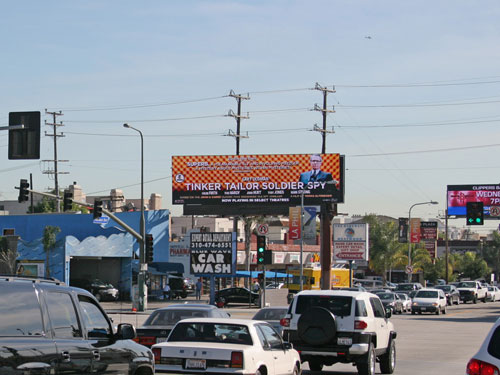
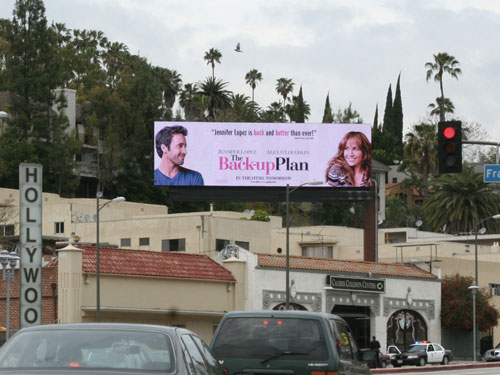
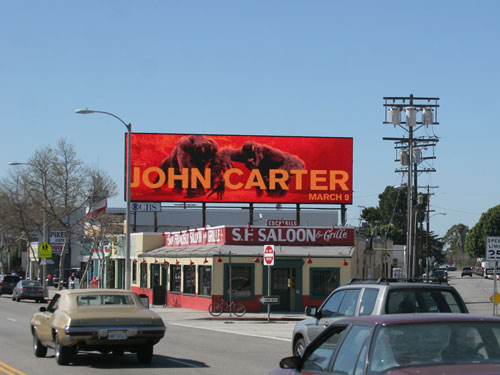
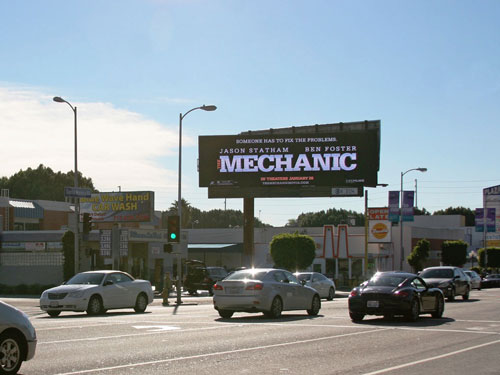
The Boston-Manchester DMA is one of New England’s largest and most educated billboard markets, with 1,790 billboard faces spanning Suffolk County, Middlesex County, Norfolk County, Essex County, and surrounding counties in Massachusetts and southern New Hampshire.
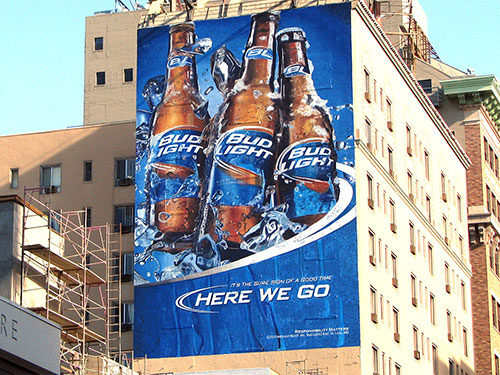
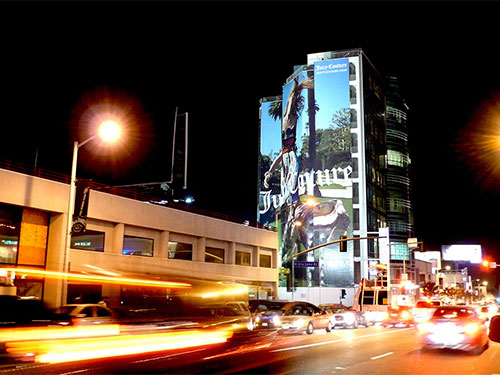
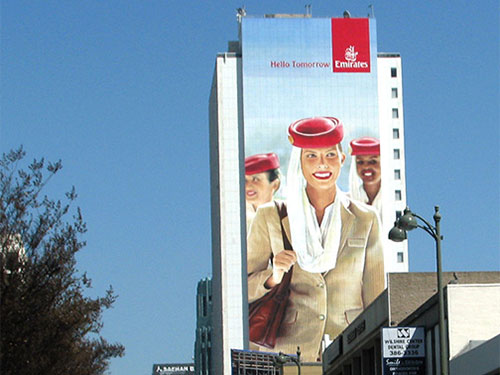
Billboard advertising in Boston starts at $2,000 per 4-week period. Static poster billboards in Boston average $2,750 per 4-week period ($2,000–$3,500). Static bulletin billboards average $9,750 ($5,500–$14,000), digital bulletin billboards average $8,500 ($5,500–$11,500), and Wallscape mural billboards average $45,000 ($15,000–$75,000) per 4-week period.
Billboard advertising in Boston has CPMs starting at $5 per 4-week period. Static poster billboard CPMs in Boston average $7 ($5–$9) per 4-week period. Static bulletin billboard CPMs average $9 ($5–$12), digital bulletin billboard CPMs average $8 ($5–$11), and Wallscape mural billboard CPMs average $44 ($15–$73).
Billboard density is highest along Route 1 (US-1) (62 faces), Route 9 (42 faces), and Washington St (40 faces), with static bulletins, digital bulletins, static posters, digital posters, and Wallscape mural billboards available across the DMA. The DMA spans from downtown Boston and Suffolk County through the North Shore, South Shore, MetroWest suburbs, and south into Providence, reaching one of the country’s most highly educated and affluent regional audiences.
Boston-Manchester, MA-NH Billboard Market Snapshot
The Boston-Manchester, MA-NH billboard market tracked by Blue Line Media includes 1,790 billboard faces, comprising 236 digital (LED) and 1,554 static (printed/mesh) displays. Billboard coverage spans 5+ counties, with the heaviest concentration in Suffolk County, Worcester County, Essex County, Middlesex County and Norfolk County. The market delivers approximately 342,079,796 weekly impressions (age 18+), equivalent to approximately 1,368,319,184 impressions over a standard 4-week campaign period.
Inventory by Location Type — Boston-Manchester, MA-NH
Urban — 90%
Suburban — 0%
Rural — 10%
Board Count by County — Boston-Manchester, MA-NH
County
Billboard Faces
Suffolk County
494
Worcester County
296
Essex County
261
Middlesex County
228
Norfolk County
167
Top Roads by Billboard Density — Boston-Manchester, MA-NH
Road / Corridor
Billboard Faces
Route 1 (US-1)
62
Route 9
42
Washington St
40
Route 20
38
I-93
33
Sample Billboard Inventory — Boston-Manchester, MA-NH
Location / Road
Format
Direction
4-Week Imps (Age 18+)
I-93/SE Expwy
Static Bulletin
S
11,083,036
I-93
Digital Bulletin
NW
7,382,492
Rt 128/I-95 WS 329ft N/O Exit 19B (WT) F/N - 1
Static Bulletin
NW
6,759,316
Massachusetts Avenue @ Columbus Avenue
Static Bulletin
NW
5,184,116
45 No. Washington St.North End
Static Bulletin
S
5,023,780
I-93 ROSE KENNEDY GREENWAY
Static Bulletin
SE
4,997,192
Cross St
Static Bulletin
SE
4,909,832
STUART ST
Wallscape
E
4,604,260
Boston, MA Billboard Advertising Market Data
No. of Billboards
1,790
Roads
Route 1 (US-1) (62 faces) — reaching north and south shore commuters, retail shoppers, and travelers along the Providence Highway and Tobin Bridge corridor, one of the Greater Boston area’s highest-traffic surface routes. Route 9 (42 faces) — reaching MetroWest commuters, retail and medical corridor audiences along the Boylston Street/Worcester Turnpike, from Boston’s Fenway neighborhood through Brookline, Newton, Natick, and Framingham. Washington St (40 faces) — reaching urban Boston, Roslindale, Dedham, and inner suburban audiences along one of the city’s primary surface arterials connecting downtown to the southwest neighborhoods. Route 20 (38 faces) — reaching west suburban commuters and retail audiences from Boston through Waltham, Watertown, Newton, and the Worcester Turnpike corridor across Middlesex County. I-93 (33 faces) — reaching Greater Boston commuters and travelers on the primary interstate serving downtown Boston, connecting the South Shore, Braintree, Quincy, and Dorchester to the north with Lawrence, Haverhill, and New Hampshire. Additional coverage on the I-93/Southeast Expressway through South Boston and Dorchester, I-290 through Worcester and central Massachusetts, Route 12 and Route 2A through the north and northwest suburbs, Broadway through Somerville and Chelsea, the I-90/Mass Pike through Newton and Framingham, Blue Hill Ave through Roxbury and Milton, and McClellan Highway through East Boston.
Attractions and Neighborhoods
Back Bay, Beacon Hill, Charlestown, Chinatown, Dorchester, Downtown, East Boston, Fenway-Kenmore,
Hyde Park, Jamaica Plain, Mattapan, Mission Hill, North End, Roslindale, Roxbury, South Boston,
South End, West End, West Roxbury, Allston, Brighton, Bay Village, Leather District, Seaport,
Cambridge, Somerville, Quincy, Braintree, Weymouth, Lynn, Salem, Peabody, Waltham, Newton,
Framingham, Natick, Woburn, Burlington, Lowell, Lawrence, Manchester NH, Nashua NH
How much does billboard advertising cost in Boston, MA?
Billboard advertising in Boston starts at $2,000 per 4-week period. Static poster billboards (medium format) average $2,750 per 4-week period ($2,000–$3,500). Static bulletin billboards (large format, 14'×48') average $9,750 per 4 weeks ($5,500–$14,000). Digital bulletin billboards (LED, large format) average $8,500 per 4 weeks ($5,500–$11,500). Wallscape mural billboards (large-format graphics on building and parking structure exteriors) average $45,000 per 4 weeks ($15,000–$75,000). A $5,000 minimum spend applies and may be spread across multiple boards and flight periods. Premium locations — including I-93/Southeast Expressway interchanges, Wallscape locations in downtown Boston and Fenway, and high-visibility sites along Route 1 — may be priced above these ranges depending on availability.
What is the CPM for billboard advertising in Boston, MA?
Billboard advertising in Boston has CPMs starting at $5 per 4-week period. Static poster billboards (medium billboards) average $7 CPM ($5–$9) per 4-week period. Static bulletin billboards (large billboards, 14'×48') average $9 CPM ($5–$12). Digital bulletin billboards average $8 CPM ($5–$11). Wallscape mural billboards average $44 CPM ($15–$73), reflecting prime large-format placement on high-visibility building faces across Boston’s urban core. Digital poster billboards average $9 CPM ($7–$11). CPMs are calculated using the average 4-week impressions (age 18+) for each format across all 1,790 billboard faces in the Boston-Manchester DMA.
How often will people see my billboard in Boston, MA?
A static bulletin in Boston delivers an average of 1,212,144 impressions (age 18+) over a 4-week campaign period. A digital bulletin delivers an average of 1,062,882 impressions over the same period. A Wallscape mural billboard delivers an average of 1,026,864 impressions per 4-week period. Commuters on major corridors like Route 1 (US-1), Route 9, and I-93 typically pass the same billboard multiple times per week, making billboards one of the highest-frequency media formats available. Across all 1,790 billboard faces in the Boston-Manchester DMA, the market delivers approximately 1,368,319,184 total impressions per 4-week period.
What are the best roads for billboard advertising in Boston, MA?
The highest-density billboard corridors in the Boston DMA are Route 1 (US-1) (62 faces), Route 9 (42 faces), Washington St (40 faces), Route 20 (38 faces), and I-93 (33 faces). Route 1 (US-1) is Greater Boston’s highest-volume surface corridor for billboard advertising, running from downtown Boston south through Dedham, Norwood, and Walpole, and north through Saugus, Peabody, and Lynnfield, capturing both retail and commuter audiences in two directions. Route 9 spans the MetroWest corridor from Fenway/Brookline through Newton, Natick, and Framingham, making it the primary reach vehicle for Boston’s western suburbs and the I-90/Mass Pike audience. Washington St connects inner Boston neighborhoods with the southwest suburbs, offering strong reach to urban and near-suburban residential audiences across Roxbury, Dedham, and Norwood. Route 20 and I-93 round out the market’s freeway and arterial coverage, with I-93’s Southeast Expressway providing high-frequency exposure to daily commuters between downtown Boston and the South Shore communities of Quincy, Braintree, and Weymouth.
How many billboards are in Boston, MA?
The Boston-Manchester DMA contains 1,790 billboard faces tracked by Blue Line Media across Suffolk County, Middlesex County, Norfolk County, Essex County, and surrounding counties. Of these, 236 are digital (LED) and 1,554 are static (printed/mesh), spanning Wallscape mural, bulletin, and poster formats. Billboard coverage reaches 5+ counties in the DMA, with the highest concentrations in Middlesex County, Norfolk County, and Suffolk County.
What types of billboards are available in Boston, MA?
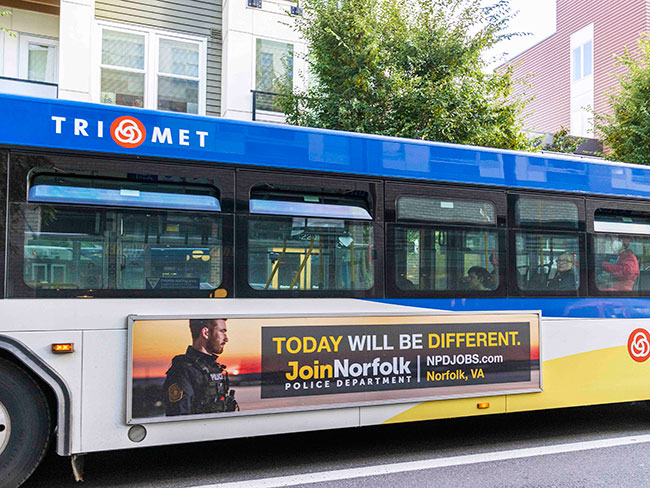
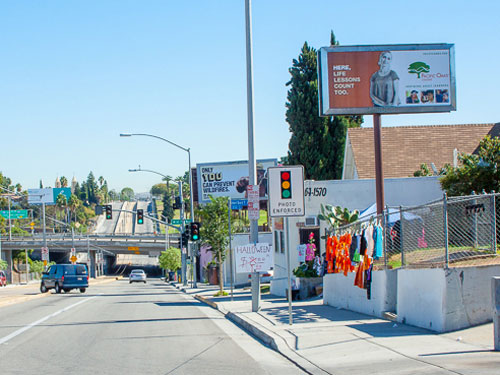
Boston billboard inventory includes Wallscape mural billboards (large-format graphics on building and parking structure exteriors), static bulletins (large format, 14'×48'), digital bulletins (LED, large format), static posters (medium format), and digital posters. Of the 1,790 faces in the Boston-Manchester DMA, 236 are digital (LED) and 1,554 are static (printed/mesh). 90% of inventory is in urban and urban business locations, 0% suburban, and 10% rural, offering flexible targeting across Boston-Manchester audience densities.
When is the best time to advertise on billboards in Boston, MA?
Billboard demand in Boston peaks in two windows: September through November (college move-in and fall semester drives heavy consumer, retail, and university advertising across the DMA’s large student and young professional population) and February through May (post-winter rebound with strong retail, healthcare, and financial services advertising ahead of spring). The spring window also captures the Boston Marathon (April) and Head of the Charles Regatta (October), two of New England’s highest-attendance events. Summer (June through August) is moderately active, with beach and tourism-driven campaigns along Route 1 North toward the North Shore and Cape Cod. For popular I-93 and Route 1 locations, plan 6–8 weeks in advance; Wallscape locations in downtown Boston and Fenway may require 8–12 weeks due to limited availability.
How does billboard advertising work in Boston, MA?
Getting started with billboard advertising in Boston is straightforward:
Get a quote — Tell Blue Line Media your target area, budget, and campaign dates.
Choose your billboard — Blue Line Media recommends available billboard locations matching your audience and flight.
Provide creative or use our free design service.
Go live — Boards are posted and your campaign runs for your contracted flight period.
What size are billboards in Boston, MA?
Billboard sizes in Boston follow industry-standard dimensions. Static bulletin billboards (large format) measure 14 feet high by 48 feet wide (14'×48'). Static poster billboards (medium format) measure 10.5 feet high by 22.75 feet wide (10.5'×22.75'). Digital bulletin billboards and digital poster billboards share the same dimensions as their static counterparts. Wallscape mural billboards are printed or mesh graphics mounted to building and parking structure exteriors; sizes vary by building face, ranging from a few hundred to several thousand square feet.
How far in advance do I need to book billboard advertising in Boston, MA?
As soon as possible, because advertising is sold on a first come, first served basis. Availability changes daily as campaigns book and end.
Creative Due Dates:
Static (Print): 2–3 weeks prior to ad start date. May be reduced in certain cases.
Digital: 3 business days prior to ad start date.
Can I target specific neighborhoods or areas with billboard advertising in Boston, MA?
Yes — the Boston-Manchester DMA offers distinct sub-markets for targeted billboard campaigns. Downtown Boston and the Seaport District reach professionals, financial services workers, and business travelers at the core of New England’s largest economy. The North Shore (Salem, Beverly, Peabody, Lynn) offers strong reach to suburban commuters and retail audiences along Route 1 North and I-95. The South Shore (Quincy, Braintree, Weymouth, Norwell) captures dense suburban residential and commuter audiences along I-93 South and Route 3. MetroWest (Framingham, Natick, Waltham, Newton) reaches affluent suburban professionals and technology corridor workers along Route 9 and the I-90/Mass Pike. Southern New Hampshire (Manchester, Nashua) extends DMA reach northward, providing access to a growing population of Boston-area transplants along I-93 and Route 3 North.
What are the most popular billboard locations in Boston, MA?
Among the most-viewed billboard corridors in the Boston DMA are Route 1 (US-1), Greater Boston’s highest-volume surface billboard corridor running north through the North Shore and south through Dedham and Norwood (62 faces), Route 9, the primary MetroWest arterial from Fenway through Newton, Natick, and Framingham (42 faces), Washington St, connecting inner Boston neighborhoods to the southwest suburbs (40 faces), Route 20, reaching the west suburban corridor from Waltham through Newton and Framingham (38 faces), and I-93, the primary interstate serving downtown Boston, the South Shore, and southern New Hampshire (33 faces). Blue Line Media can recommend specific billboard positions — including Wallscape mural locations — on these and other corridors based on current availability.
One call to Blue Line Media provides us with any advertising option in any city across the country.
Matt FreemanPETA
Blue Line Media has executed multiple government PSA campaigns in multiple U.S. cities, thereby giving our clients a truly national reach.
Sarah ParadaPorter Novelli
Working with Blue Line Media is a delight.
Judith DeCampACS Quantum
Blue Line Media is extremely helpful in delivering advertising media in any city we want across the country.
Sheldon de SouzaBetter World Advertising
Copyright 2026 Blue Line Media Inc
Not all images represent ads placed by Blue Line Media. Images may be subject to copyright. Names and trade and service marks are property of their owners and are not intended to endorse Blue Line Media.
In accordance with its Accessibility Statement, Blue Line Media is committed to ensuring accessibility of its website. To report an accessibility issue, request accessibility assistance regarding website content, or to request a specific electronic format, please contact the accessibility coordinator at 800-807-0360 or complete the form. Reasonable efforts will be made to accommodate all needs.
By using this website, you consent to the placement and storing of cookies on your computer by this website. These cookies are used to collect information about how you interact with our website and allow us to remember you. We use this information in order to improve and customize your browsing experience and for analytics and metrics about our visitors both on this website and other media. To find out more about the cookies we use, see our Privacy Policy.