The Baltimore DMA spans the greater Baltimore metro and surrounding region, with 1,611 billboard faces tracked by Blue Line Media across Baltimore City, Baltimore County, Anne Arundel, Howard, Carroll, and Harford counties in Maryland.
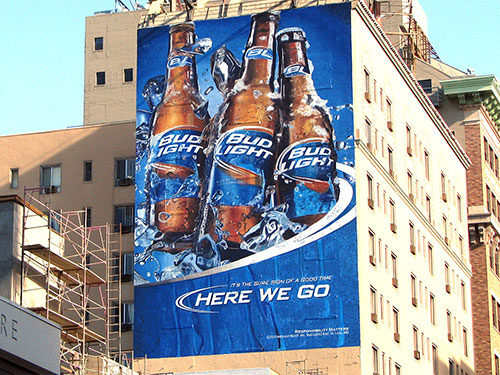
Billboard advertising in Baltimore starts at $1,300 per 4-week period. Static poster billboards in Baltimore average $1,650 per 4-week period ($1,300–$2,000). Static bulletin billboards average $6,250 ($3,000–$9,500), digital bulletin billboards average $7,000 ($4,500–$9,500), and Wallscape mural billboards average $11,500 ($8,000–$15,000) per 4-week period.
Billboard advertising in Baltimore has CPMs starting at $1 per 4-week period. Static poster billboard CPMs in Baltimore average $5 ($4–$6) per 4-week period. Static bulletin billboard CPMs average $8 ($4–$12), digital bulletin billboard CPMs average $4 ($2–$5), and Wallscape mural billboard CPMs average $5 ($3–$6).
Billboard density is highest along Pulaski Highway (US-40) (82 faces), Route 140 (Reisterstown Road) (65 faces), and I-95 (32 faces). The Baltimore DMA extends from Baltimore City and Baltimore County east through Harford County, south through Anne Arundel County, west through Howard County, and north through Carroll County, covering the full greater Baltimore metropolitan area and its eastern Maryland commuter shed.
Baltimore, MD Billboard Market Snapshot
The Baltimore, MD billboard market tracked by Blue Line Media includes 1,611 billboard faces, comprising 73 digital (LED) and 1,538 static (printed/mesh) displays. Billboard coverage spans 5+ counties, with the heaviest concentration in Baltimore city, Cecil County, Baltimore County, Harford County and Carroll County. The market delivers approximately 198,085,271 weekly impressions (age 18+), equivalent to approximately 792,341,084 impressions over a standard 4-week campaign period.
Inventory by Location Type — Baltimore, MD
Urban — 76%
Suburban — 0%
Rural — 24%
Board Count by County — Baltimore, MD
County
Billboard Faces
Baltimore city
656
Cecil County
217
Baltimore County
215
Harford County
198
Carroll County
189
Top Roads by Billboard Density — Baltimore, MD
Road / Corridor
Billboard Faces
Pulaski Highway (US-40)
82
Route 140 (Reisterstown Rd)
65
US 50 (John Hanson Hwy)
33
I-95
32
Belair Road (US-1)
32
Sample Billboard Inventory — Baltimore, MD
Location / Road
Format
Direction
4-Week Imps (Age 18+)
Charles Street
Digital Bulletin
S
7,850,500
Lombard Street
Digital Poster
E
6,667,472
Lombard St
Wallscape
E
6,630,020
Hopkinns Plaza & West Lombard Street (Corner)
Wallscape
SE
6,184,412
RUSSELL ST
Digital Bulletin
S
5,162,188
PULASKI HWY
Digital Bulletin
E
3,803,612
I 95
Static Bulletin
N
3,574,948
I 83
Static Bulletin
SE
3,395,632
Baltimore, MD Billboard Advertising Market Data
No. of Billboards
1,611
Roads
Pulaski Highway (US-40) (82 faces) — the highest-density billboard corridor in the Baltimore DMA, running east from downtown Baltimore through Essex and White Marsh into Harford County, reaching working-class residential neighborhoods, industrial commuters, and retail shoppers along one of Maryland’s busiest surface arteries. Route 140 (Reisterstown Rd) (65 faces) — the main northwest corridor connecting Baltimore City through Pikesville, Reisterstown, and Westminster into Carroll County, reaching suburban households, commuters, and retail audiences across a diverse cross-section of Baltimore County and Carroll County communities. US 50 (John Hanson Hwy) (33 faces) — the primary southeast corridor linking Baltimore to Annapolis and the Eastern Shore through Anne Arundel County, carrying heavy commuter and tourism traffic on one of the region’s most strategic east–west surface routes. I-95 (32 faces) — the main interstate spine of the Baltimore DMA, running north–south through the region and connecting Baltimore City to Howard County, Anne Arundel County, and the greater Washington, D.C. corridor, carrying the highest daily vehicle count of any corridor in the market. Belair Road (US-1) (32 faces) — the primary northeast surface artery running from the Baltimore City line through Parkville, Carney, and White Marsh into Harford County, reaching dense suburban residential communities and retail corridors on the Baltimore region’s busiest northeast surface route. Additional coverage on Route 30 (Reisterstown Road north of Reisterstown), North Point Boulevard through Dundalk and Essex, O’Donnell Street in the Canton/Brewers Hill commercial corridor, Washington Boulevard (US-1 south) through Brooklyn and Glen Burnie, and Frederick Road (MD-144) through Catonsville and Ellicott City.
Attractions and Neighborhoods
Inner Harbor, M&T Bank Stadium, Oriole Park at Camden Yards, National Aquarium,
Federal Hill, Fells Point, Canton, Mount Vernon, Hampden, Locust Point, Charles Village,
Little Italy, Bolton Hill, Highlandtown, Roland Park, Station North, Brewer’s Hill,
Patterson Park, Mount Washington, Remington, Greektown, Harbor East, Midtown-Belvedere,
Annapolis, Columbia, Towson, Bel Air, Westminster, Catonsville, Ellicott City, Glen Burnie
How much does billboard advertising cost in Baltimore, MD?
Billboard advertising in Baltimore starts at $1,300 per 4-week period. Static poster billboards (medium format) average $1,650 per 4-week period ($1,300–$2,000). Static bulletin billboards (large format, 14'×48') average $6,250 per 4 weeks ($3,000–$9,500). Digital bulletin billboards (LED, large format) average $7,000 per 4 weeks ($4,500–$9,500). Wallscape mural billboards (large-format graphics on building and parking structure exteriors) average $11,500 per 4 weeks ($8,000–$15,000). A $5,000 minimum spend applies and may be spread across multiple boards and flight periods. Premium locations — including key I-95 interchanges through the Baltimore metro, Inner Harbor and Harbor East corridor positions, and high-demand Pulaski Highway (US-40) placements — may be priced above these ranges depending on availability.
What is the CPM for billboard advertising in Baltimore, MD?
Billboard advertising in Baltimore has CPMs starting at $1 per 4-week period. Static poster billboards (medium billboards) average $5 CPM ($4–$6) per 4-week period. Static bulletin billboards (large billboards, 14'×48') average $8 CPM ($4–$12). Digital bulletin billboards average $4 CPM ($2–$5). Wallscape mural billboards average $5 CPM ($3–$6), reflecting prime large-format placement on building and structure exteriors in high-traffic Baltimore locations. Digital poster billboards average $2 CPM ($1–$2). CPMs are calculated using the average 4-week impressions (age 18+) for each format across all 1,611 billboard faces in the Baltimore DMA.
How often will people see my billboard in Baltimore, MD?
A static bulletin in Baltimore delivers an average of 766,991 impressions (age 18+) over a 4-week campaign period. A digital bulletin delivers an average of 1,812,667 impressions over the same period. A Wallscape mural billboard delivers an average of 2,591,578 impressions per 4-week period. Commuters on major corridors like Pulaski Highway (US-40), Route 140 (Reisterstown Road), and I-95 typically pass the same billboard multiple times per week, making billboards one of the highest-frequency media formats available. Across all 1,611 billboard faces in the Baltimore DMA, the market delivers approximately 792,341,084 total impressions per 4-week period.
What are the best roads for billboard advertising in Baltimore, MD?
The highest-density billboard corridors in the Baltimore DMA are Pulaski Highway (US-40) (82 faces), Route 140 (Reisterstown Rd) (65 faces), US 50 (John Hanson Hwy) (33 faces), I-95 (32 faces), and Belair Road (US-1) (32 faces). Pulaski Highway (US-40) is the top choice for maximum reach across the working-class east Baltimore residential and industrial market, offering the DMA’s largest single-corridor face count and dense exposure from the city limit through Essex and White Marsh into Harford County. Route 140 (Reisterstown Road) is the premier northwest corridor for reaching suburban Baltimore County and Carroll County households, commuters, and retail shoppers between Pikesville and Westminster. US 50 (John Hanson Highway) is the strategic corridor for campaigns targeting Annapolis, the Anne Arundel County office and retail market, and Eastern Shore-bound travelers, providing consistent high-frequency exposure along one of Maryland’s busiest east–west surface routes. I-95 is the market’s top choice for regional reach, connecting Baltimore City audiences to Howard County, Anne Arundel County, and the Washington, D.C. market corridor with the highest vehicle count of any DMA corridor. Belair Road (US-1) is the primary northeast surface route for reaching the dense suburban residential communities of Parkville, Carney, and White Marsh on one of the Baltimore region’s most consistent commuter surface arteries. Additional coverage on Route 30 (Reisterstown Road north of Reisterstown), North Point Boulevard through Dundalk and Essex, O’Donnell Street in the Canton/Brewers Hill commercial corridor, Washington Boulevard (US-1 south) through Brooklyn and Glen Burnie, and Frederick Road (MD-144) through Catonsville and Ellicott City.
How many billboards are in Baltimore, MD?
The Baltimore DMA contains 1,611 billboard faces tracked by Blue Line Media across Baltimore City, Baltimore County, Anne Arundel, Howard, Carroll, and Harford counties in Maryland. Of these, 73 are digital (LED) and 1,538 are static (printed/mesh), spanning Wallscape mural, bulletin, and poster formats. Billboard coverage reaches 5+ counties in the DMA, with the highest concentrations in Baltimore County, which rings the city and contains major commercial corridors including Pulaski Highway, Reisterstown Road, and Belair Road, and Anne Arundel County, which contains Annapolis, the BWI Airport corridor, and the US 50 and I-97 arteries.
What types of billboards are available in Baltimore, MD?
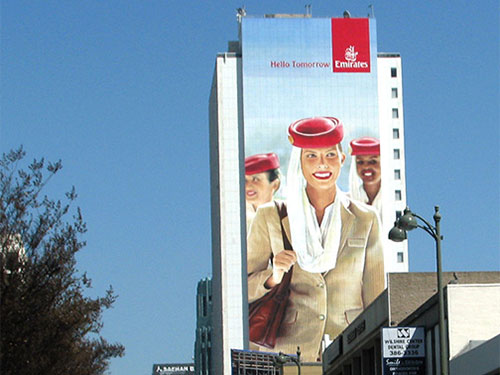
Baltimore billboard inventory includes Wallscape mural billboards (large-format graphics on building and parking structure exteriors), static bulletins (large format, 14'×48'), digital bulletins (LED, large format), static posters (medium format), and digital posters. Of the 1,611 faces in the Baltimore DMA, 73 are digital (LED) and 1,538 are static (printed/mesh). 76% of inventory is in urban and urban business locations, 0% suburban, and 24% rural, offering flexible targeting across Baltimore audience densities.
When is the best time to advertise on billboards in Baltimore, MD?
The Baltimore DMA sees peak billboard demand in spring (March–May) and fall (September–November), when commuter traffic is at its highest and corporate and retail ad budgets are most active. Summer (June–August) benefits from Orioles and Ravens preseason traffic, waterfront tourism at the Inner Harbor, and the Maryland State Fair in late August, which drive elevated audience density on the I-95 and Pulaski Highway corridors. The off-peak window in January–February typically offers better availability and negotiating flexibility, particularly for premium I-95 interchange and Wallscape positions. A 2–3 week lead time is standard for most placements; book 4–6 weeks ahead for Wallscape and high-demand I-95 interchange locations.
How does billboard advertising work in Baltimore, MD?
Getting started with billboard advertising in Baltimore is straightforward:
Get a quote — Tell Blue Line Media your target area, budget, and campaign dates.
Choose your billboard — Blue Line Media recommends available billboard locations matching your audience and flight.
Provide creative or use our free design service.
Go live — Boards are posted and your campaign runs for your contracted flight period.
What size are billboards in Baltimore, MD?
Billboard sizes in Baltimore follow industry-standard dimensions. Static bulletin billboards (large format) measure 14 feet high by 48 feet wide (14'×48'). Static poster billboards (medium format) measure 10.5 feet high by 22.75 feet wide (10.5'×22.75'). Digital bulletin billboards and digital poster billboards share the same dimensions as their static counterparts. Wallscape mural billboards are printed or mesh graphics mounted to building and parking structure exteriors; sizes vary by building face, ranging from a few hundred to several thousand square feet.
How far in advance do I need to book billboard advertising in Baltimore, MD?
As soon as possible, because advertising is sold on a first come, first served basis. Availability changes daily as campaigns book and end.
Creative Due Dates:
Static (Print): 2–3 weeks prior to ad start date. May be reduced in certain cases.
Digital: 3 business days prior to ad start date.
Can I target specific neighborhoods or areas with billboard advertising in Baltimore, MD?
Yes. Blue Line Media can target specific sub-markets throughout the Baltimore DMA, including downtown Baltimore and the Inner Harbor/Harbor East corridor along Pratt Street and Light Street for professional, tourist, and entertainment audiences; the Pulaski Highway (US-40) east Baltimore corridor through Essex and Middle River for working-class residential, retail, and industrial audiences; the Route 140/Reisterstown Road northwest corridor through Pikesville and Towson for affluent Baltimore County suburban households; the Anne Arundel County corridor along US 50 and MD-2 for the Annapolis market, BWI Airport traffic, and government and defense industry audiences; and the Howard County corridor along US 29 and MD-108 for the Columbia and Ellicott City suburban professional market.
What are the most popular billboard locations in Baltimore, MD?
Among the most-viewed billboard corridors in the Baltimore DMA are Pulaski Highway (US-40), the highest-density billboard corridor in the DMA running east from Baltimore City through Essex and White Marsh (82 faces), Route 140 (Reisterstown Road), the primary northwest corridor connecting Baltimore through Pikesville and Reisterstown into Carroll County (65 faces), US 50 (John Hanson Highway), the main southeast artery linking Baltimore to Annapolis and the Eastern Shore through Anne Arundel County (33 faces), I-95, the main interstate spine of the DMA connecting Baltimore City to Howard and Anne Arundel counties and the Washington corridor (32 faces), and Belair Road (US-1), the primary northeast surface route through Parkville, Carney, and White Marsh into Harford County (32 faces). Blue Line Media can recommend specific billboard positions — including Wallscape mural locations — on these and other corridors based on current availability.
One call to Blue Line Media provides us with any advertising option in any city across the country.
Matt FreemanPETA
Blue Line Media has executed multiple government PSA campaigns in multiple U.S. cities, thereby giving our clients a truly national reach.
Sarah ParadaPorter Novelli
Working with Blue Line Media is a delight.
Judith DeCampACS Quantum
Blue Line Media is extremely helpful in delivering advertising media in any city we want across the country.
Sheldon de SouzaBetter World Advertising
Copyright 2026 Blue Line Media Inc
Not all images represent ads placed by Blue Line Media. Images may be subject to copyright. Names and trade and service marks are property of their owners and are not intended to endorse Blue Line Media.
In accordance with its Accessibility Statement, Blue Line Media is committed to ensuring accessibility of its website. To report an accessibility issue, request accessibility assistance regarding website content, or to request a specific electronic format, please contact the accessibility coordinator at 800-807-0360 or complete the form. Reasonable efforts will be made to accommodate all needs.
By using this website, you consent to the placement and storing of cookies on your computer by this website. These cookies are used to collect information about how you interact with our website and allow us to remember you. We use this information in order to improve and customize your browsing experience and for analytics and metrics about our visitors both on this website and other media. To find out more about the cookies we use, see our Privacy Policy.